For a long time, certain professions carried an unspoken boundary, defined not by ability, but by who was expected to belong. Today, that line has begun to shift. Women are not only stepping into these spaces, but holding their ground within them, bringing with them perspectives shaped by experience, resilience, and identity.
In fields like aviation, where precision and discipline take precedence, that presence quietly redefines the narrative. Regita Savira stands within this shift, carrying forward an early ambition shaped by steady support and personal conviction, navigating not only the skies, but the balance between professional rigour and the enduring sense of self she brings into it.
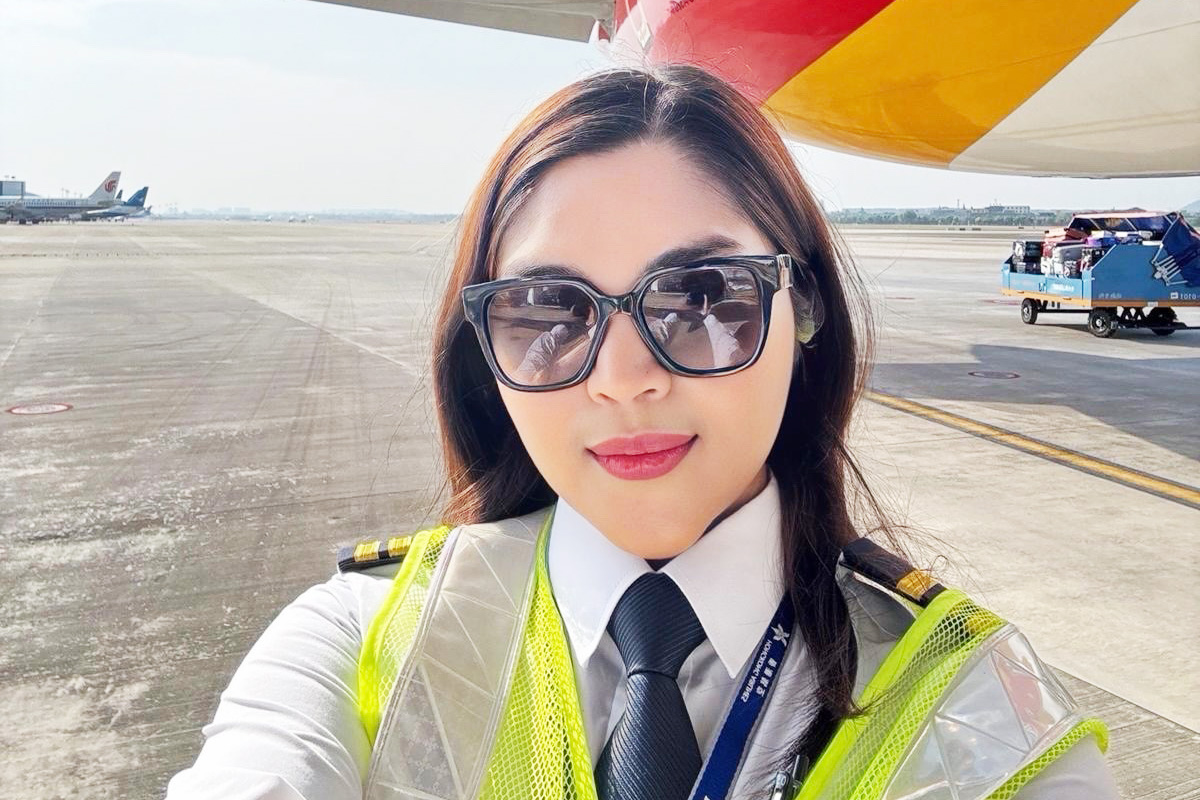
Photo credit: Regita Savira
“Every time a woman steps into the cockpit with confidence, it makes the path a little brighter and easier for the ones coming after her. You belong here, go fly!”
[TPB] Could you begin by telling us a little about yourself and how your journey into aviation first began?
I have been working in aviation as a pilot for six years, currently as a Senior First Officer. So far, I have logged around 3,000 flight hours, with type ratings on the Airbus A320 and A321.
My professional journey began in 2019 with AirAsia Malaysia, where I was based in Kuala Lumpur for about a year. Like many in the industry, I experienced a pause during the pandemic and did not fly for nearly two years. In 2022, I returned to the cockpit with Pelita Air Service, my first airline in Indonesia, where I continued to build my experience in domestic operations.
Earlier in February 2025, I joined Hong Kong Airlines, where I am currently based. It has been a meaningful step forward, and at the moment, I am the only Indonesian woman pilot flying there.
[TPB] What first drew you to becoming a pilot, and when did that interest start to feel like a serious path?
The idea began to take shape during my high school years. My father works within the aviation industry, and through him, I was introduced to that world quite early on. His influence played a significant role in shaping my interest.
At the same time, I grew up travelling frequently with my family, so being at the airport and experiencing flights became something I genuinely enjoyed. There was a certain energy to it, the movement, the atmosphere, the sense of departure and arrival, that stayed with me.
Over time, that interest became more defined. By the time I finished school, I felt certain enough to pursue it seriously, and I went on to enrol in flying school. From there, the journey continued, step by step, into the career I have today.
[TPB] What was it like stepping into a profession that has long been seen as male-dominated?
I would say it was quite challenging. Sometimes people tend to underestimate women as pilots, and that can come from both men and women. I understand where it comes from, flying is often associated with machinery and technical work, which isn’t always seen as something feminine.
But it’s 2026, and things are changing. Women and men have the same rights and opportunities now, whether in education or career. In aviation, there’s really no difference. We go through the same training, the same process, and are held to the same standards. At the end of the day, if we make it, we make it. If we fail, we fail.
[TPB] As a woman, in your day-to-day work, are there moments where your perspective feels distinctly different or valuable?
Yes, there are quiet moments when my perspective as a woman might feel a little different from some of my crew members, simply because we all come from diverse backgrounds, cultures, and experiences.
But those moments are rare and never significant. In the cockpit or cabin, we are a team first. We rely on clear communication, mutual respect, and strict adherence to SOPs. Those standards guide us, while our individual experiences add perspective.
What matters most is that we listen to one another, support each other, and fly the aircraft safely together.
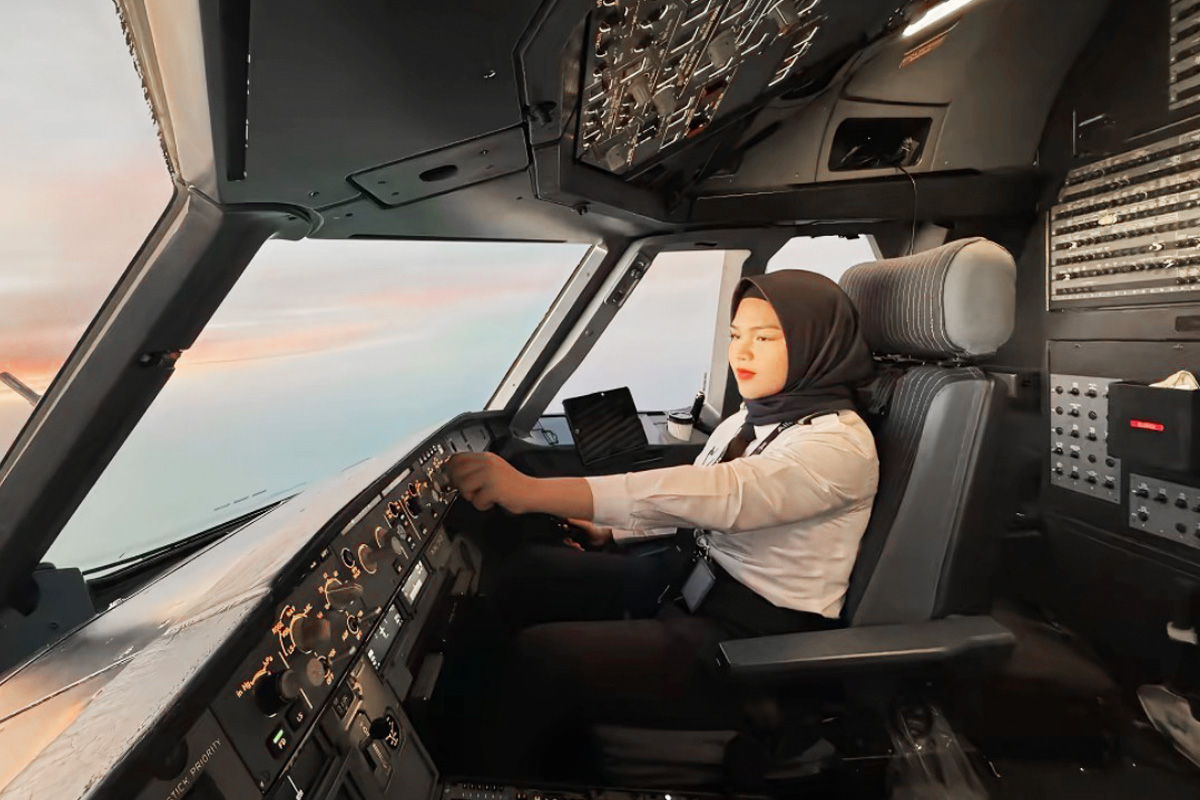
Photo credit: Regita Savira
[TPB] Beyond technical skills, what has this profession taught you about yourself?
This profession has taught me many things, but the one that stands out the most is gratitude. I’ve wanted to become a pilot since I was 15. I worked towards it, went straight to flying school after high school, and just as I was starting to build my hours, the pandemic happened. Everything paused, including my career.
In aviation, especially for my generation, there are things you simply cannot control. Opportunity is limited, while the number of people pursuing it keeps growing. There is always an element of luck involved.
Looking back, I feel grateful. Despite everything, I was able to continue, to move across three airlines within six years, and to keep doing what I love. Flying, travelling, and experiencing the world, it’s something I don’t take for granted.
[TPB] How has this journey influenced your confidence, mindset, or sense of independence?
I’ve experienced quite a low point in my career, and I feel fortunate to have found my way back to flying. That alone has made me more grateful and naturally more responsible for the work that I do.
It has also made me more mindful. I tend to think more carefully about my actions now, especially how they might affect me in the long term. There is a greater sense of awareness and consideration in the way I approach things.
At the same time, this journey has helped me grow into a more independent person. Being able to support myself, make my own decisions, and build my life comes with its own responsibilities, but also a sense of fulfilment.
[TPB] What challenges have you faced along the way, and how have you learned to navigate them?
One of the biggest challenges is working with different people every day. Everyone comes from different backgrounds, cultures, and ways of thinking. In many ways, being a pilot also requires strong managerial skills.
We need to manage how we communicate, how we present ourselves, and how we share opinions. So we can speak up when needed, while still being respectful to others. Even when we’ve just met, we have to function as a team immediately.
There is also a responsibility to lead while still following strict procedures. In that sense, we are constantly balancing both roles. Everything we do, including how we work with others, ultimately affects the safety of the flight.
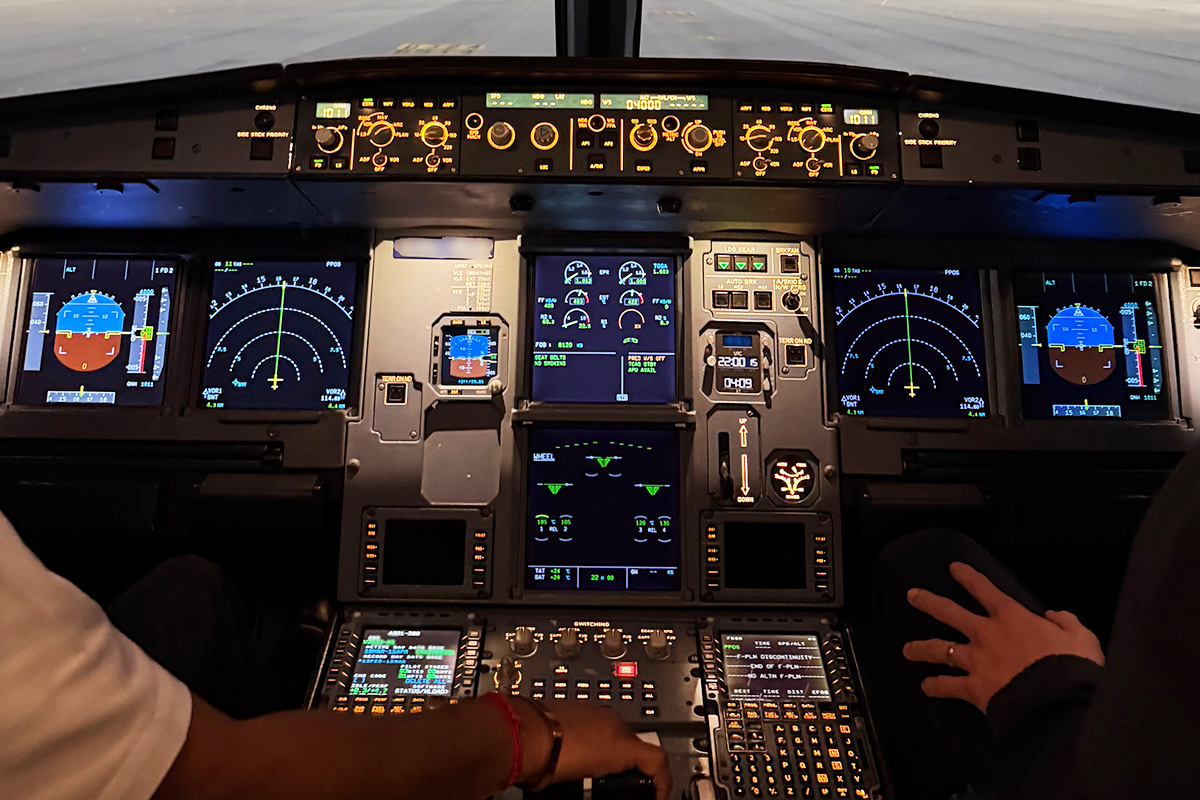
Photo credit: Regita Savira
[TPB] Do you think public perceptions around women in aviation are shifting? How so?
I do believe public perception is shifting in a positive way. Before I started, it was still quite rare to see women pilots, especially in international environments. People would sometimes react differently, simply because it wasn’t something they were used to.
Now, there are more women flying as captains and first officers, and it’s something I feel happy to see. Slowly, the focus is changing. People are beginning to see us simply as pilots: trained, capable, and qualified, regardless of gender.
There’s a quiet sense of pride in that shift. I hope it continues, so future generations can pursue this path without questioning whether they belong.
[TPB] What is the most meaningful part of your work that people might not always see?
The most meaningful part of our work that people often don’t see is the quiet, constant vigilance behind the scenes. Even with the autopilot on, we’re never just sitting there doing nothing.
We are actively managing the entire aircraft, monitoring systems, weather, traffic, and fuel, while staying alert for anything that could go wrong. At the same time, we are mentally rehearsing emergency procedures, so that if something happens, we can respond immediately and accurately.
It’s a level of focus and discipline that isn’t always visible, but it carries a great responsibility. That silent commitment to safety is what protects every life on board, and it is one of the reasons I value this work so deeply.
[TPB] Looking ahead, what kind of presence or impact would you like to leave for other women entering this field?
What I really hope to leave for other women entering aviation is a simple message: don’t be afraid to chase your dream of flying. The sky is big enough for all of us. There will always be people who question, who doubt, or who don’t fully understand. But at the end of the day, only you know your own strength and your own ambitions. Trust yourself, work hard, stay grounded, and keep going. Every woman who steps into the cockpit makes the path a little more open for those who come next. You belong here.