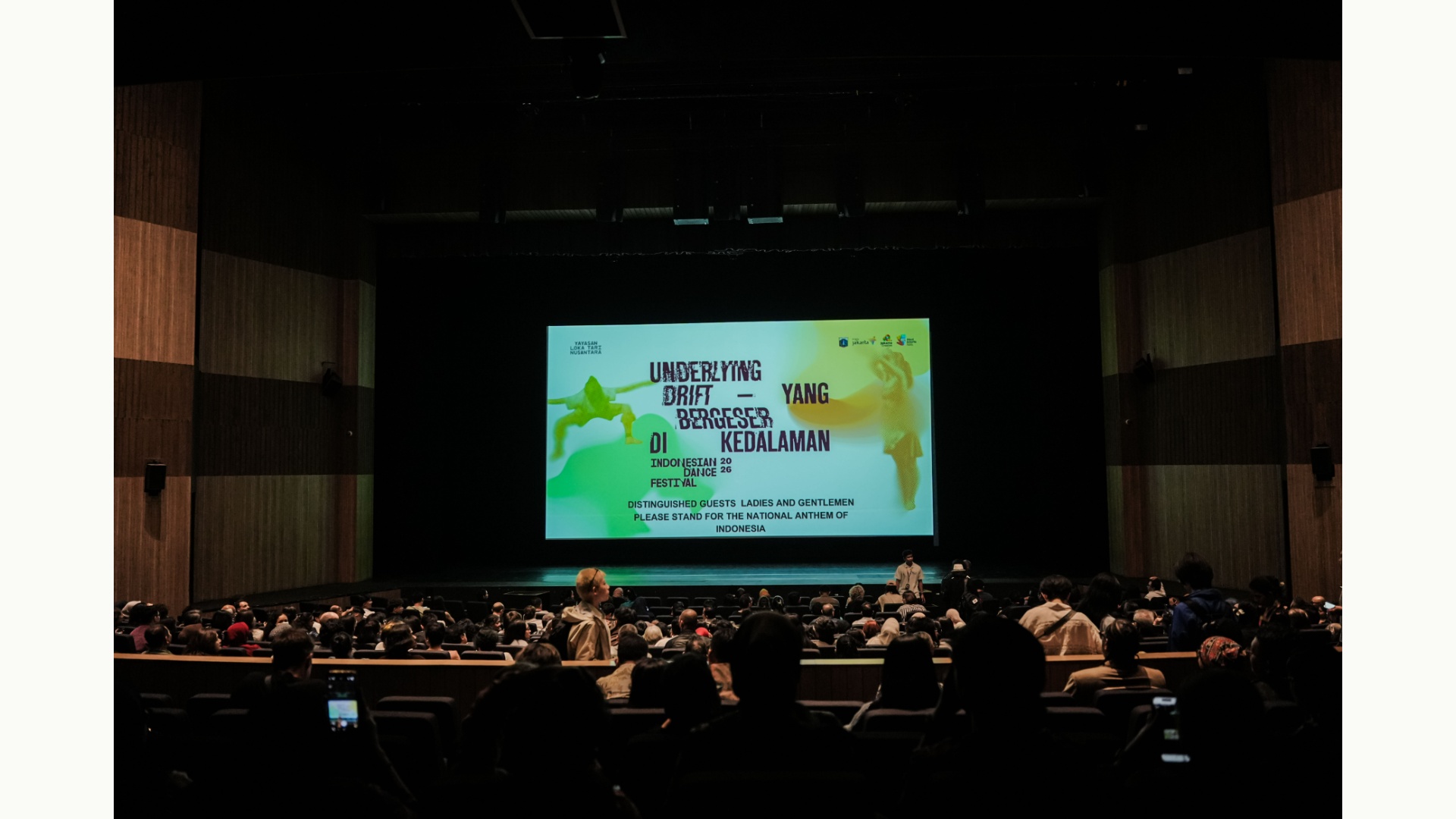
The 18th edition of the Indonesian Dance Festival (IDF) officially concluded on 1 November 2026, bringing four days of contemporary dance performances, workshops, discussions, and artistic programmes to Jakarta. Running from 29 October under the theme Underlying Drift – Yang Bergeser di Kedalaman, this year's festival brought together artists, choreographers, curators, and audiences from Indonesia and around the world.
Throughout the four-day programme, IDF 2026 offered a space to experience and explore different approaches to contemporary dance. Through its KAMPANA and BENTANG programmes, the festival presented a range of artistic perspectives shaped by personal experiences, memory, identity, human relationships with the environment, and broader social and cultural dynamics.
The performances featured works by Hartati, whose Waktu Paruh opened the festival, alongside works by Indonesian and international artists. These included Reality by Soy Chanborey, Tetuha Halimawong by Ahmad Susantri, Menstruation Sumo Dance by team chiipro, New Fieldwork by Yuka Uchida, Sea-Ghosts by Natalie Quan Yau Tso, and KONJO: Becoming Otherwise by Densiel Lebang.
Beyond the performances, IDF 2026 also hosted workshops and dance talks, creating further opportunities for knowledge exchange and artistic dialogue. One of the highlights was Making, in Her Own Rhythm: Art, Work, Care, and a Life in Practice, a conversation featuring Hartati, Densiel Lebang, and Nanako Matsumoto, moderated by Keni Soeriaatmadja. The session explored the realities of women's artistic practices, particularly in relation to changing bodies, work, responsibilities, and everyday life.
For Ratri Anindyajati, Director of Indonesian Dance Festival 2026, the festival is not simply a platform for presenting performances, but also a place where people with different experiences and perspectives can come together through dance.
"Indonesian Dance Festival is not just about presenting performances. It is also about creating a space where people with different experiences and perspectives can meet through dance. Over these four days, we have seen how artistic works, conversations, and encounters can open up new questions and ways of seeing. We hope that what artists, audiences, and everyone involved take away from this experience will continue to grow into conversations and collaborations long after the festival ends," said Ratri.
Through the theme Underlying Drift – Yang Bergeser di Kedalaman, IDF 2026 invited audiences to consider the shifts that may not always be visible on the surface, yet are deeply felt in everyday life and artistic practice. Across its performances and programmes, the festival revealed how artists translate experiences, memories, identities, and relationships with their surroundings into distinct choreographic approaches.
River Lin, Co-Curator of Indonesian Dance Festival 2026, sees the coming together of these different perspectives as an essential part of the artistic experience shaped by the festival.
"With Underlying Drift – Yang Bergeser di Kedalaman, we wanted to create a space to consider changes that may not always be visible on the surface, but are deeply felt in our lives and artistic practices. The works and programmes presented at Indonesian Dance Festival 2026 show how artists engage with experiences, memories, identities, and relationships with their surroundings through different choreographic approaches. It is this coming together of perspectives that forms an important part of the festival's artistic experience," River explained.
First established in 1992, Indonesian Dance Festival has evolved through decades of change, growing alongside generations of artists and arts practitioners. Sustaining the festival is part of a broader effort to preserve a space where artists can create, connect, and develop their practices, while contributing to the growth of Indonesia's contemporary dance ecosystem.
Nungki Kusumastuti, one of the founders of Indonesian Dance Festival and Yayasan Loka Tari Nusantara (YLTN), also emphasised the importance of keeping this space alive and accessible for future generations of artists.
"Since its first edition in 1992, Indonesian Dance Festival has gone through many changes and journeys alongside generations of artists and arts practitioners. For me, sustaining the festival is not simply about ensuring that it continues to take place every two years. It is also about nurturing a space where artists can create, meet, and develop their practices. I hope Indonesian Dance Festival will continue to play a role in the growth of Indonesia's contemporary dance ecosystem and create opportunities for the generations to come," said Nungki.
Beyond the public-facing programme, IDF 2026 was made possible through the collective efforts of artists, arts practitioners, the curatorial team, production and technical crews, administrative and communications teams, partners, and supporting institutions. These collaborations are essential to sustaining the festival while strengthening connections among arts practitioners at both local and international levels.
With the conclusion of its 2026 edition, Indonesian Dance Festival once again highlights the importance of spaces where artists can create, connect, exchange ideas, and explore new possibilities for collaboration. While this year's programme has come to a close, the festival's ongoing journey continues, nurturing the practices and development of contemporary dance in Indonesia.
About Indonesian Dance Festival
Indonesian Dance Festival (IDF) is an international contemporary dance festival first established in Jakarta in 1992. Organised under the auspices of Yayasan Loka Tari Nusantara (YLTN), the festival brings together artists and works from Indonesia and around the world. It is committed to supporting artistic creation, the development of contemporary dance, and the exchange of ideas across the wider dance ecosystem.