The question sounds simple enough. Yet within cities that move increasingly fast, genuine dialogue often feels surprisingly difficult to come by. Conversations happen everywhere, from social media timelines and messaging applications to office meetings and dinner tables. Information travels instantly. Opinions arrive endlessly.
Despite this constant exchange, opportunities to sit with different perspectives, to listen with curiosity, and to leave with a broader understanding than before can feel increasingly uncommon.
Perhaps that is why certain cultural spaces continue to matter.
Across Jakarta, creative venues appear and disappear with remarkable frequency. New galleries emerge, multidisciplinary collectives establish temporary homes, independent initiatives introduce fresh programmes, and cafés evolve into communal destinations.
The city’s cultural landscape has never lacked energy. Yet longevity remains a far rarer achievement than visibility.
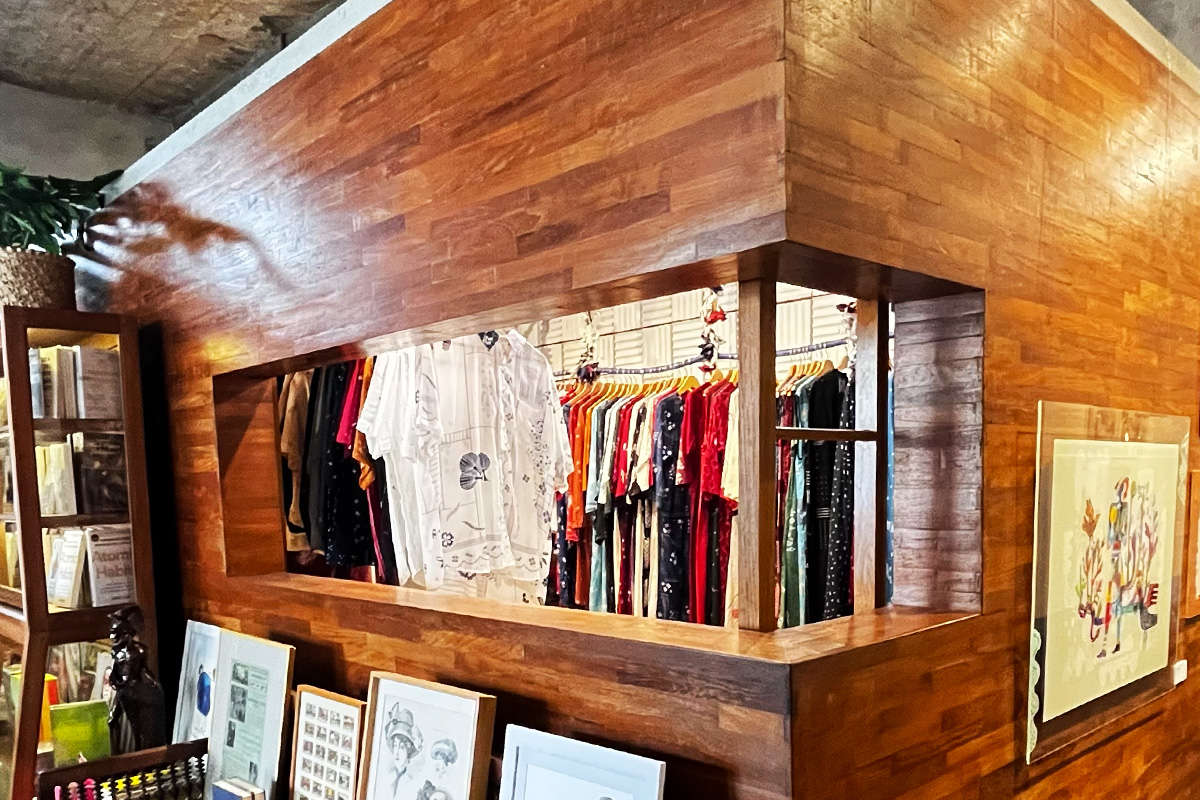
Photo credit: Dia.lo.gue Arts
Building an art space is one challenge. Remaining culturally relevant for more than a decade is another entirely.
The difficulty becomes especially apparent within the worlds of art and design. While Indonesia’s creative ecosystem has expanded significantly over the past two decades, art and design still feel intimidating to many audiences.
Gallery spaces are often associated with exclusivity, specialised language, and a level of familiarity that not everyone feels they possess. Design, meanwhile, is frequently discussed through professional disciplines rather than everyday experiences, despite being present in nearly every aspect of daily life.
At the same time, a growing appetite for community-driven spaces suggests that people are looking for something more than exhibitions alone. Increasingly, audiences seek places where culture feels approachable, where ideas can be exchanged naturally, and where learning happens through participation rather than observation.
The most memorable creative spaces are often not defined by a single programme or exhibition, but by the encounters they make possible.
People return because of a feeling. A conversation remembered years later. An unexpected introduction. A perspective discovered over coffee. A workshop that sparks curiosity.
These moments rarely appear in annual reports or visitor statistics, yet they are often what transform a venue into part of a city’s cultural memory.
Long before discussions about creative ecosystems, third spaces, and community-building became common vocabulary, Dia.lo.gue was already built around a remarkably similar belief.
Established in 2009 by designer Ignatius Hermawan Tanzil and cultural advocate Engel Tanzil, Dia.lo.gue began not with a desire to create another gallery, but with a conviction that they needed more spaces for exchange.
At the time, opportunities to engage with art, design, and culture often felt limited or exclusive. More importantly, spaces where people could gather around those interests without feeling intimidated were difficult to find.
Engel Tanzil traces part of that inspiration to her admiration for French cultural life, where conversations are often treated as an essential part of everyday experience. Discussions need not be formal or profound to hold value, even simple exchanges can lead to new understandings.
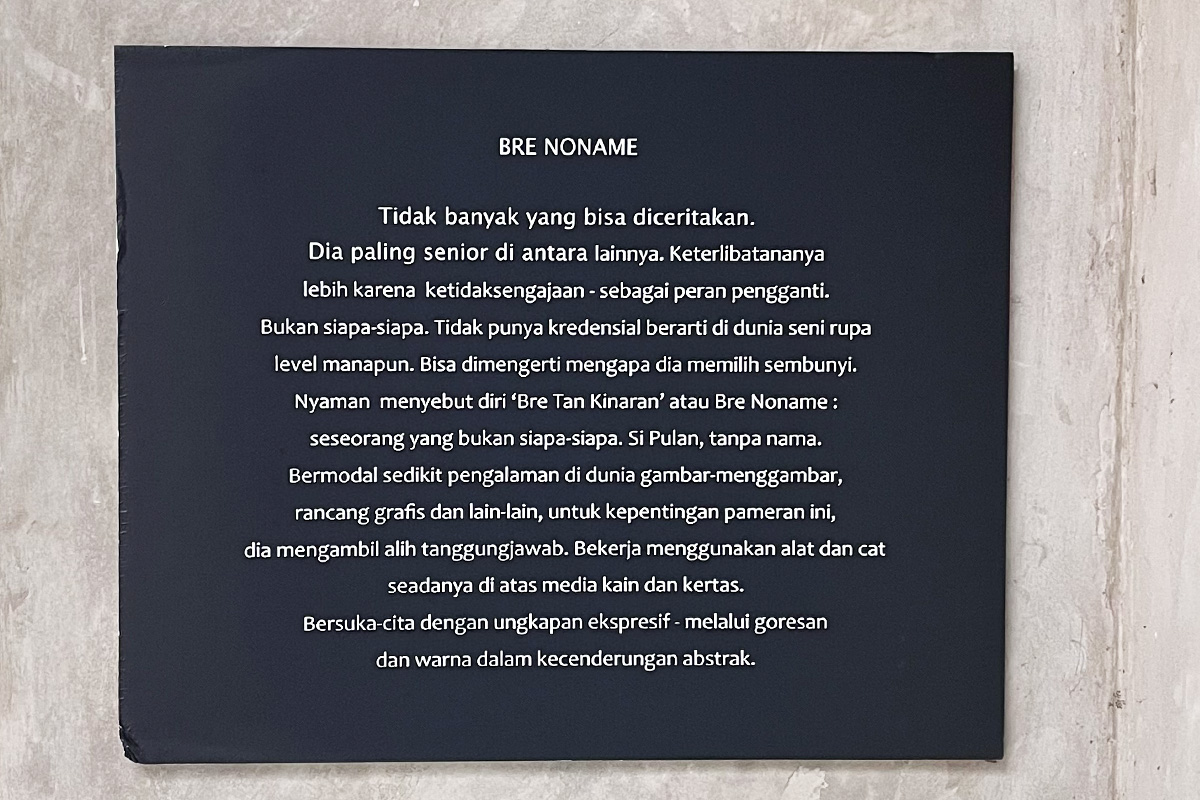
Photo credit: Dia.lo.gue Arts
“I was inspired by the French culture of talking, chatting, and sharing,” she recalls. “I realised Indonesians rarely engage in dialogue in that way: simply exchanging thoughts and leaving with a different perspective afterwards.”
The observation eventually evolved into a larger ambition. Together, the couple imagined a place where the subjects they cared about most: art, design, and culture, could become catalysts for conversation.
The goal was never to position themselves at the centre of the story. In fact, Engel notes that they actively resisted making the space about its founders. Their interests lay elsewhere: sharing knowledge, connecting people, and creating opportunities for discovery.
That philosophy remains embedded in the name itself. Inspired by the French word dialogue, the founders adapted it into something more playful and distinctly local. Dia, Lo, and Gue, three familiar pronouns in Indonesian conversation, became a reflection of the exchanges they hoped would take place inside the space.
The name functions simultaneously as a brand identity and a mission statement. Between “dia”, “lo”, and “gue”, dialogue happens.
From the beginning, art, design, and culture were established as Dia.lo.gue’s three guiding pillars. The choice was both personal and practical. Hermawan Tanzil brought a design background through his work with LeBoYe, while Engel carried a deep interest in cultural storytelling and knowledge-sharing. Alongside their first partner, Windi Salomo, they sought to create a platform where these disciplines could intersect rather than exist separately.
The result was never intended to function solely as an exhibition venue. One of the more forward-thinking aspects of Dia.lo.gue was its decision to combine multiple functions within a single environment. At a time when Jakarta offered relatively few examples of integrated creative spaces, Dia.lo.gue brought together an art space, a café, and a shop corner under one roof.
The approach was inspired partly by observations from overseas, where similar models encouraged broader participation while creating financial sustainability independent of sponsorship.
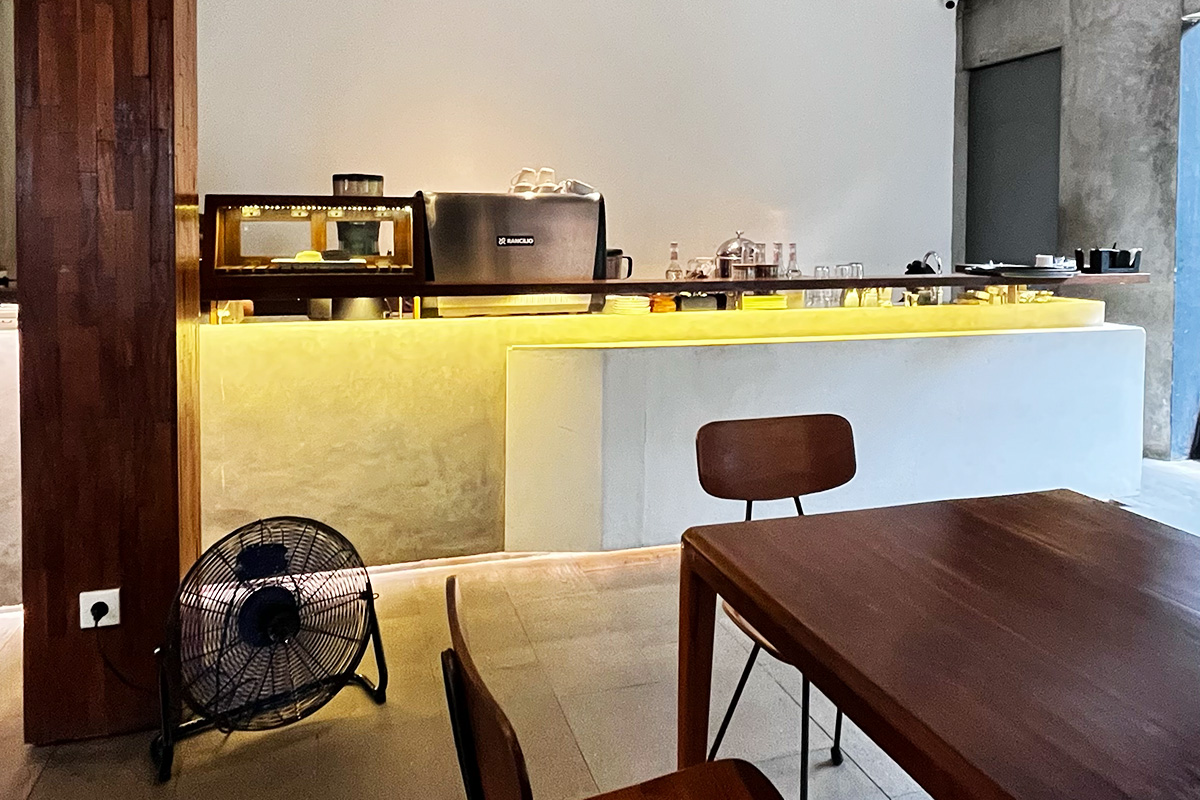
Photo credit: Dia.lo.gue Arts
As Engel explains, even something as simple as purchasing a cup of coffee could ultimately contribute to funding an exhibition.
More importantly, the combination reflected the founders’ belief that dialogue requires people. Someone might arrive for coffee and discover an exhibition. Another visitor could enter through a design event and leave with a new appreciation for contemporary art. Different motivations, backgrounds, and interests would eventually share the same space.
“People can come for various reasons,” Engel shares. “And when they arrive here, they can engage in dialogue.”
The physical environment reinforces that openness. Designed by Andra Matin, the building carries its own story of collaboration and resilience.
Constructed during the economic turbulence surrounding the 1998, the project required adaptability from everyone involved. Certain materials were simplified. Some finishes remained unfinished for a period. What mattered most was ensuring the space could exist. The building a year later receive recognition from the Indonesian Institute of Architects, yet its most distinctive characteristic remains its flexibility.
Unlike conventional galleries that often dictate how artworks should fit within a space, Dia.lo.gue operates with remarkable fluidity.
Large portions of the ground floor can be transformed according to curatorial needs. Artists are encouraged to work with the materials and formats that best serve their ideas, while the team adapts the environment accordingly. The architecture becomes a collaborator rather than a limitation.
This openness extends beyond the building itself and into the programming.
Over the years, Dia.lo.gue has hosted exhibitions, workshops, talks, and multidisciplinary events spanning photography, ceramics, literature, illustration, archives, and design.
Today, the space typically presents between twelve and fourteen programmes annually, each curated with a different focus to ensure that the conversations taking place remain varied and relevant. Photography may lead one season, while poetry, books, ceramics, or archival exhibitions shape another. The intention is not simply to present work, but to sustain curiosity.
Yet maintaining relevance over fifteen years requires more than consistency.
Every creative era arrives with its own challenges. The pandemic fundamentally altered how people gathered. New creative venues continue emerging across Jakarta. Audience interests evolve. Cultural habits shift. Ideas that felt urgent five years ago may require entirely different approaches today.
Rather than chasing every trend, Dia.lo.gue approaches these changes through curiosity and careful evaluation.
“Every five years has its own colour and season,” Engel reflects. “When we prepare an exhibition or programme, we ask whether it is still relevant today. Sometimes the answer requires research, sometimes it requires a different focus altogether.”
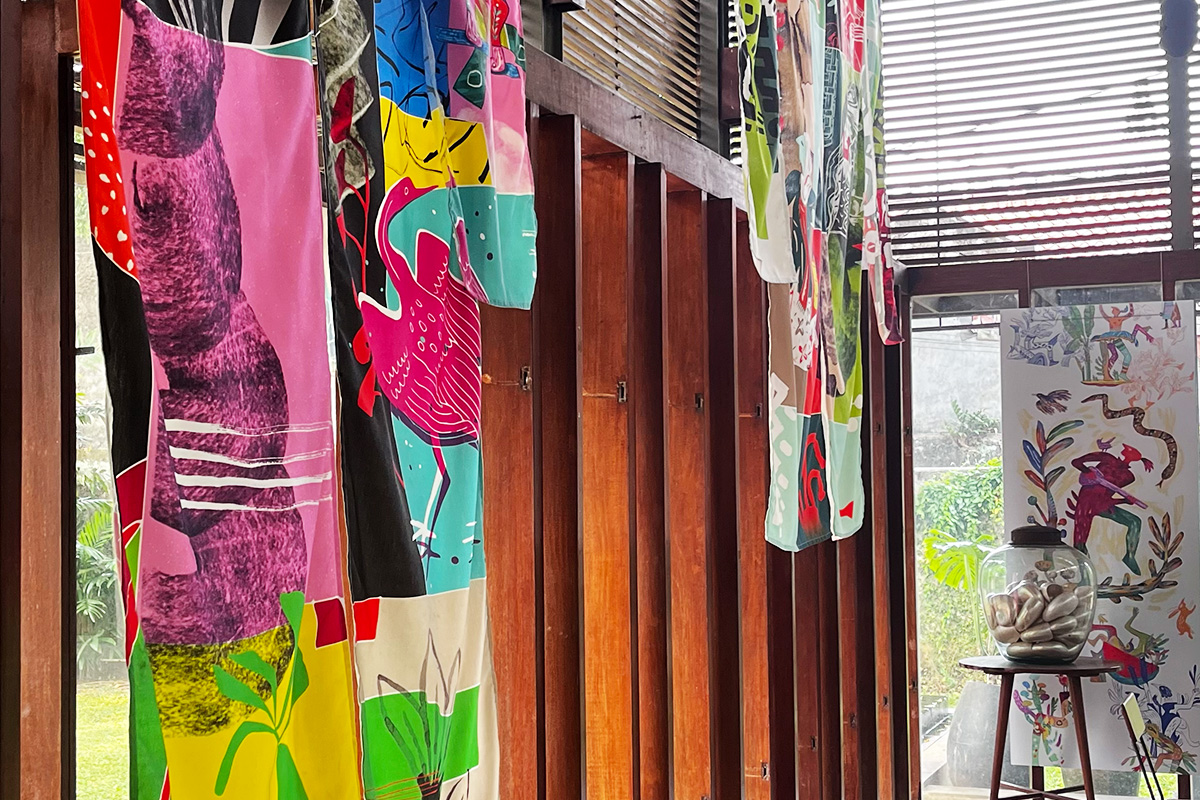
Photo credit: Dia.lo.gue Arts
That willingness to remain open while staying rooted in a clear philosophy may explain why Dia.lo.gue continues to resonate.
Its longevity has less to do with permanence than adaptability. The core values remain recognisable, while the forms through which they are expressed continue evolving. Collaborations, partnerships, and new initiatives become ways of extending the conversation rather than replacing it.
Eventually, something interesting happened. Dia.lo.gue stopped feeling like a destination and started feeling like part of Jakarta itself.
According to Engel, the shift became noticeable only a few years after opening, when visitors began arriving in larger numbers and for increasingly varied reasons.
What started as a space dedicated to art, design, and culture gradually became somewhere people felt comfortable inhabiting on their own terms. Some arrived for exhibitions. Others came to work, meet friends, browse local products, attend discussions, or simply spend an afternoon within its walls.
That transformation may be the clearest marker of cultural significance because icons are rarely created through ambition alone. They emerge when people begin integrating a place into their routines, memories, and relationships.
Over time, the space becomes less about what it offers and more about what it enables. The true legacy of Dia.lo.gue has never been confined to exhibitions, programmes, or even the building itself. It exists within the space between people: between artists and audiences, between design and daily life, between curiosity and understanding.
As generations continue to pass through its doors, those exchanges remain its most lasting contribution. More than an art space, Dia.lo.gue has become part of the city’s collective conversation, and part of the space between us.