When talking about art galleries, most memories drift towards framed paintings, immersive sculptures, or carefully arranged materials that lean towards the abstract to say something unspoken. But what about sound? What about movement? What about touch? Galleries today are, of course, far more interactive than they once were. Yet kinetic art asks a different kind of question altogether.
“What happens when art doesn’t just sit in front of you, but lives alongside you?”
Kinetic art is, at its core, art shaped by motion. Not simply works that move, but works that unfold. Unlike static pieces that reveal themselves in a glance, kinetic art introduces time as a medium. It breathes, repeats, pauses, accelerates, and softens. Sometimes it responds to its environment, sometimes it asks the audience to slow their own bodies down to notice what is happening. There is technology behind it and then movement becomes a language. Rhythm becomes structure. Duration becomes part of the design.
Kinetic art is not something to scroll past. It is something to stay with. Globally, kinetic art has long existed at the crossroads of sculpture, engineering, and performance. What makes it different is not complexity, but sensitivity. A kinetic work is never fully finished in a single moment. It depends on air, sound, light, and the presence of the viewer.
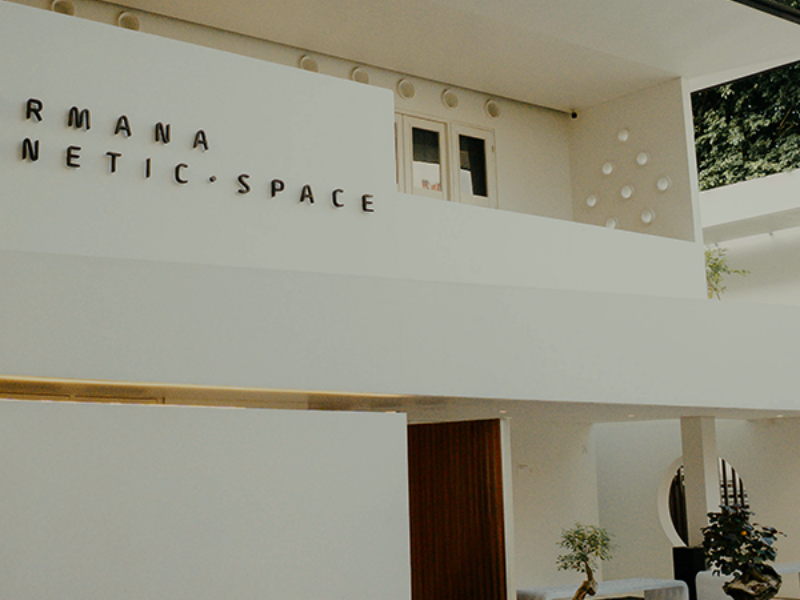
It invites observation rather than consumption. Increasingly, it also answers a cultural need, to feel time again, in an era that rarely allows it. Indonesia is not absent from this conversation. In the busy pulse of Blok M, an area known for its constant movement and its mix of generations, communities, and story, Nirmana Kinetic Space quietly opens another rhythm.
Officially launching in July 2025, Nirmana arrives as Indonesia’s first interactive kinetic art gallery. Its placement is intentional. They position themselves as a shared space, built for everyone. Amid cafés, transit points, and retail noise, it proposes a gentle counterstatement, in the middle of motion, it is okay to be who you are and to slow the pace.
Before having a permanent home, Nirmana existed piece by piece. Its kinetic works appeared across events and temporary showcases, moving between contexts, audiences, and atmospheres. Over time, something became clear. The most meaningful responses did not happen when works performed dramatically, but when visitors stayed long enough to notice subtle shifts. That realisation shaped Nirmana Kinetic Space into what it is today, a gallery one designed around presence.
Inside, visitors encounter seven in-house kinetic works, each developed entirely by the Nirmana team. Every piece carries its own tempo, emotional register, and level of interactivity. Production timelines vary widely. Some works are completed within six months. Others, such as Nayanika, took nearly two years of research, engineering, and refinement before they were ready to be experienced.
The collection offers multiple interpretations of what kinetic art can become. Nayanika combines mandala and chakra-inspired patterns with wooden structures, creating a slow, meditative rhythm that feels both spiritual and architectural.
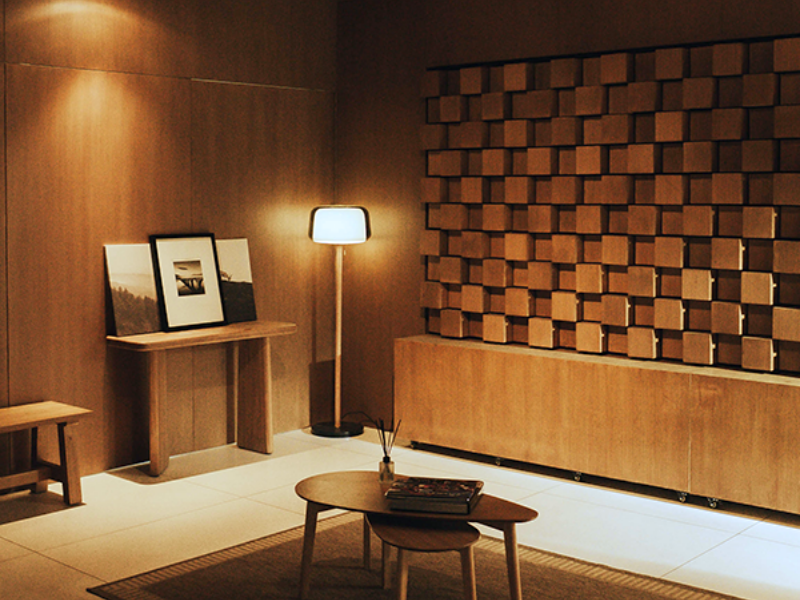
Rintik translates the intimacy of rainfall into motion with two hundred small spheres rising and falling, echoing the irregular poetry of drops meeting the ground. While Amerta plays with the illusion of perpetual flight, its elements are engineered to trace gentle arcs that seem to breathe alongside the room.
Other works expand the conversation further. Bena challenges the dominance of the visual, proving that art can be touched, navigated, and lived with. Saujana reflects on the relationship between technology and art, revealing how precision systems can still generate softness and emotion.
Senandika, a three-dimensional interactive installation, offers another approach. It is not to be touched, yet it invites intimacy through proximity, detail, and sensory awareness. And finally, Serayu, Nirmana’s very first kinetic work, remains a philosophical anchor. Inspired by the albatross, Serayu draws from the bird’s form and steady wing movement. Its continuous motion symbolises persistence, humans who move consistently, who work, return, and repeat in pursuit of freedom, dreams, and becoming. It is fitting that Nirmana began here. Not with excess, but with a meditation on endurance.
Across all seven works, one thing becomes evident, intention. From early research and mechanical testing to material selection, narrative development, and final system checks, each piece is built as a complete ecosystem. Materials are chosen for how they age, reflect light, and respond to motion. Meanings are developed alongside mechanisms. Everything is considered. The result is a space where each element supports a larger harmony.
Refina Jasmine, Guest Relations Officer at Nirmana says, “We see Nirmana as a place where people don’t have to perform their interest in art. They can arrive honest, stay briefly or longer, and let the collection meet them where they are. The movement is gentle on purpose. It gives people permission to slow their own rhythm.”
Another defining aspect of Nirmana lies in its in-house practice. All kinetic works on display are conceived, engineered, programmed, and installed by the internal team. This allows narrative, technology, and atmosphere to grow inside one coherent language. Yet this inward focus does not signal closure.
Moving into this February, Nirmana has expressed openness to collaborations across disciplines, welcoming new dialogues to form within its kinetic framework. In a city defined by speed, Nirmana offers a counter-rhythm. Here, calm is an active artistic element. Movement is a vocabulary, and art is not something to finish seeing. It is something to spend time with, allowing it to touch, to be heard, and talk back.