It often starts before the journey does, sharing locations, planning routes, choosing places that feel interesting. For women, travel can carry an undercurrent of awareness that shapes how each moment is approached. But as the boat approaches Sangiang Island, that rhythm begins to shift. The coastline opens, the air feels lighter, and the experience settles into something quieter. Here, movement feels unhurried, and the act of travelling together becomes grounded in ease rather than concern.
Set within the Sunda Strait between Java and Sumatra, Sangiang Island sits just off the coast of Banten, administratively part of Anyer in Serang Regency. Often referred to as one of the region’s most remarkable natural landscapes, the island has long been recognised for its ecological richness.
Once designated as a nature reserve spanning approximately 700 hectares, its surrounding waters were later established as a marine tourism park in the early 1990s, preserving both its land and sea as a protected environment.
Reaching the island is part of its appeal. From Jakarta, the journey begins with a drive of around two hours toward the coastal stretch of Anyer, where the rhythm of the city gradually gives way to open roads and sea air. At Paku Harbour, near the local market, small motorboats wait along the shoreline. The crossing takes about an hour, carrying travellers across calm waters as the mainland recedes into the distance and Sangiang begins to take form ahead.
The atmosphere feels open, and within that openness, there is a sense of comfort. Local caretakers, including forest rangers and coastal officers, maintain a steady presence, offering guidance and assistance when needed. Their familiarity with the island creates an environment where travellers can move with greater confidence while still feeling welcome.
Exploration across Sangiang reveals a landscape shaped by three distinct ecosystems: lowland forest, coastal woodland, and mangrove areas. These environments exist in quiet balance, supporting a range of flora and fauna that continue to thrive naturally. Trekking paths extend across hills and along sections of the coastline, offering shifting perspectives between dense greenery and expansive sea views. While some routes require careful footing, many are clearly formed, allowing travellers to navigate the terrain with ease while remaining engaged with its natural contours.
On the eastern side of the island, a cave opens toward the sea, where waves meet the rock walls in a steady rhythm. Known for its population of bats, the cave presents a striking interplay between shadow and light, with the horizon visible just beyond its edges. Elsewhere, natural formations along the coastline invite moments of quiet discovery, spaces where the landscape feels both raw and accessible.
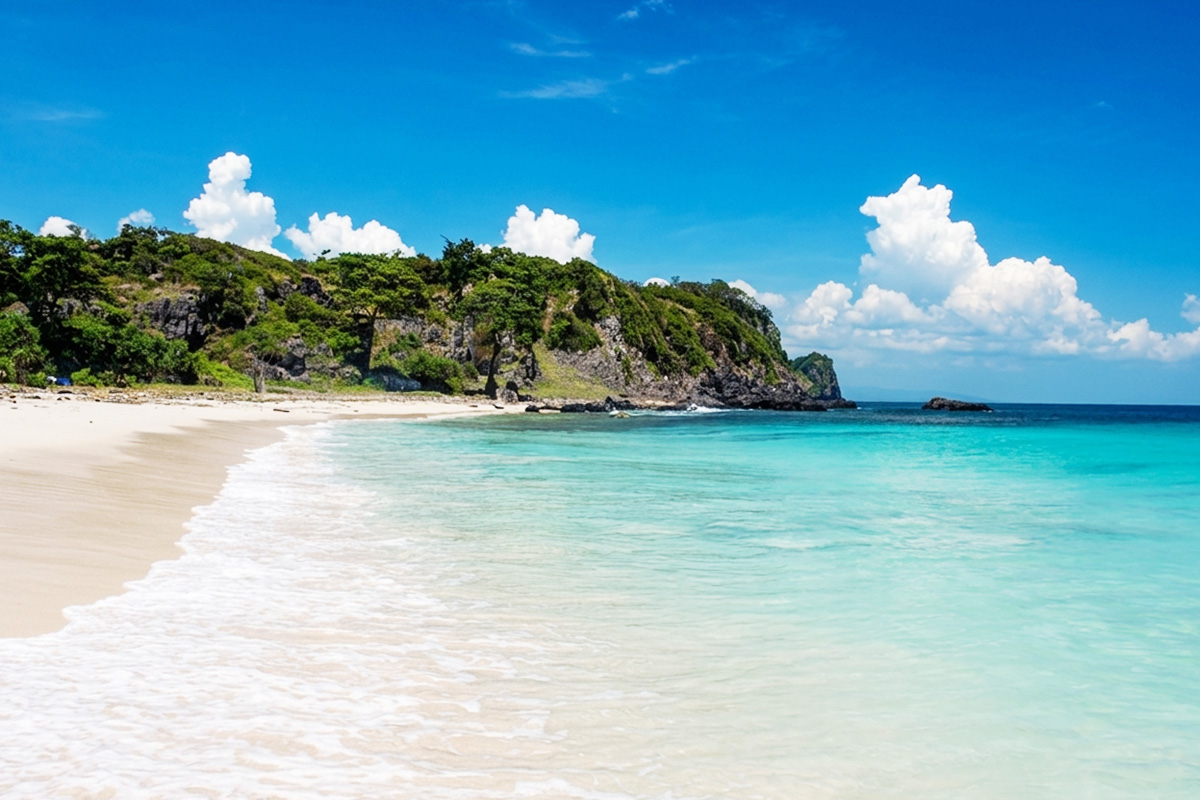
The shoreline offers its own sense of ease. At Pasir Panjang, the sand stretches wide and soft, met by relatively calm waters that make the area feel approachable throughout the day. Along the southwestern edge, coral rock formations create natural pools where the sea gathers gently before returning to open water. These spaces encourage pause rather than movement, where travellers often find themselves lingering, sharing conversations, or simply taking in the surrounding stillness.
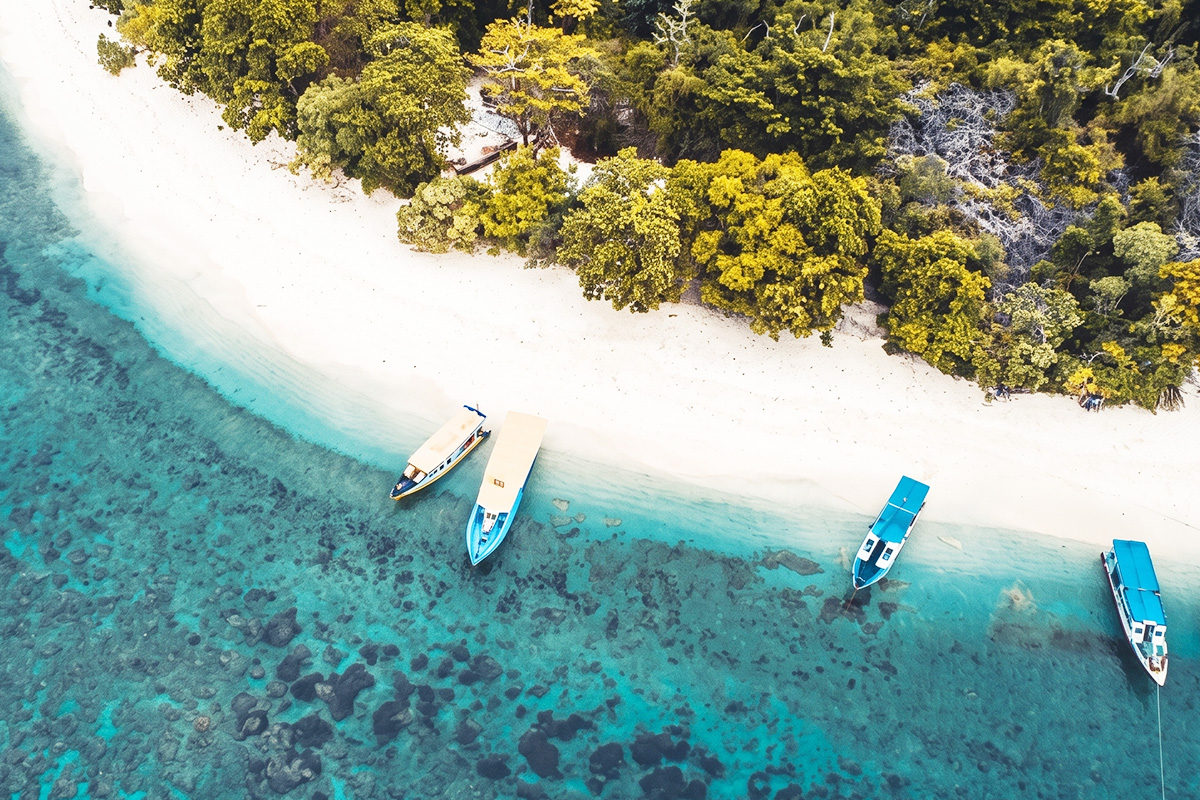
Beneath the surface, the waters surrounding Sangiang reveal a quieter richness. Coral reefs remain relatively preserved, supporting a variety of marine life that can be encountered through snorkelling in clear, shallow areas. The experience feels accessible and unhurried, requiring little more than time and presence.
Throughout the island, traces of history and daily life remain subtly visible. Remnants such as a former coastal bunker speak to earlier periods, while the ongoing presence of local caretakers reflects a continued relationship between people and place. Their role extends beyond supervision, they contribute to the sense of safety and familiarity that travellers encounter across the island, often offering directions, sharing local knowledge, or simply greeting those who pass by.
As the day progresses, the atmosphere settles into a sweet rhythm. Light softens across the coastline, and the pace of exploration naturally slows. Without the structure of a densely built destination, time on Sangiang feels flexible, allowing travellers to shape the experience around their own movement, whether through trekking, swimming, or simply resting by the shore.
Facilities remain accessible with basic structures such as ranger posts and resting areas supporting day visits. This simplicity reinforces the island’s identity as a place defined more by its environment than by infrastructure.
For women travelling together, Sangiang offers a sense of ease that does not need to be negotiated. Movement feels natural, the surroundings remain open, and the experience unfolds without strain. What begins as a carefully planned day gradually becomes something lighter, shaped by shared moments and a sense of assurance.
More than a destination, Sangiang Island becomes a reminder that travel can feel gentle and safe, where the journey is held not by urgency, but by a sense of calm that stays long after the return. Access to the island can be arranged through @sangiangisland, offering travellers a reliable way to plan routes and experience the island with greater ease.