By five in the afternoon, Glodok begins to change pace. Metal shutters remain half-open. Incense drifts from temple corners. Plastic stools appear along the pavement. People move with greater purpose, weaving between food stalls that have served the neighbourhood longer than many of their visitors have been alive.
Just across from Petak Enam, a queue starts to form before the sky has fully darkened.
Nobody is waiting for something new. That detail feels increasingly rare in a city that constantly searches for the next opening, the next trend, the next place worth photographing.
Across Jakarta, culinary culture moves quickly. Menus change. Concepts evolve. Restaurants emerge and disappear within a matter of years. Attention shifts from one neighbourhood to another.
Yet every city develops a handful of places that operate outside that cycle. Their presence becomes embedded in everyday life. Directions are given through them. Family members recommend them without hesitation. Stories are attached to them. People know exactly where they are, even after years of not visiting.
An icon occupies that position.
Its value extends beyond longevity. Time alone does not guarantee relevance. Many businesses survive for decades without becoming part of a city’s collective memory. Icons achieve something more difficult. They continue to matter.
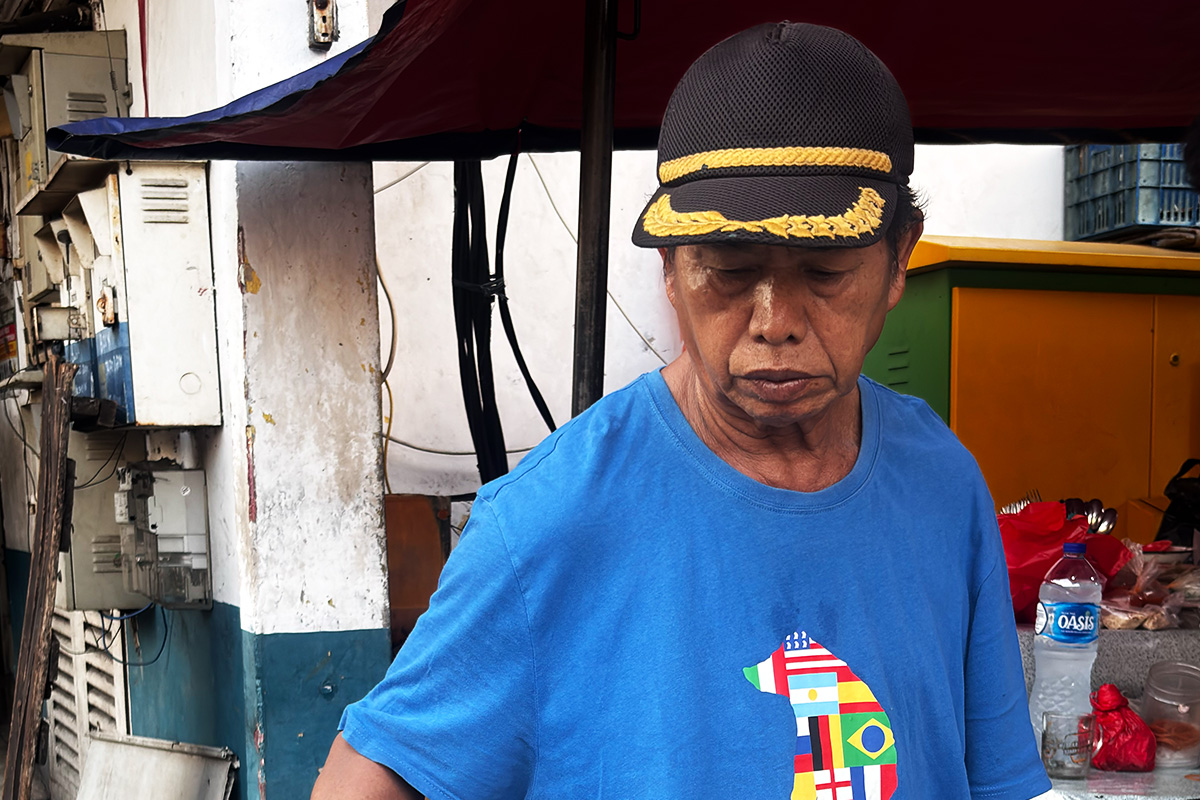
Photo credit: The Public Book
Glodok understands this better than most places. For generations, the neighbourhood has functioned as one of Jakarta’s most enduring cultural districts, where Chinese-Indonesian heritage, commerce, food, and daily life intersect.
Walking through its streets means moving through layers of history that remain visible in architecture, family-run businesses, places of worship, and recipes passed down through generations.
Among those stories sits Rujak Shanghai & Juhi Andi. The setting is remarkably modest. A tent. Long tables and chairs arranged neatly beneath it. Large pots simmering steadily. Jars filled with sauce. Stacks of plates waiting for the evening crowd.
When rain arrives, everyone beneath the tent feels it. Strong winds occasionally carry water into the dining area. Nothing about the space attempts to romanticise its age. And yet, people continue to arrive.
The stall first opened in 1948 and is now operated by Yono, the third generation entrusted with the family recipe. That responsibility arrived long before he fully understood its significance.
Yono began helping with the business in 1983 while still a teenager. At the time, the work felt familiar rather than historic. It was simply part of his life.
“It’s the same family recipe I grew up with,” he says while preparing another order for waiting customers. “Nothing has really changed.”
The simplicity of that statement carries nearly eight decades of continuity.
Long before customers knew it as Rujak Shanghai, the dish was called Juhi Incai. According to Yono, many people struggled to pronounce the name, and because at the time, around the area, numerous businesses carried Shanghai in their names, eventually leading customers to adopt an easier reference point.
The nickname stayed. Over time, it became the identity.
Stories like this often reveal how icons are formed. Recognition does not always emerge through careful branding or deliberate positioning. Communities shape their own language around places they care about, gradually creating identities that feel natural to everyone involved.
The dish itself remains distinctive even today. Each serving combines juhi, often described as dried cuttlefish or squid, alongside jellyfish, water spinach, pickled cucumber, and pickled radish. Crushed garlic and fresh lime juice are added before everything is covered with a sweet and savoury red tomato-based sauce. Roasted peanut powder completes the plate.
The final step belongs to the customer. Every ingredient must be thoroughly mixed together before the first bite. Sweetness, acidity, savouriness, citrus, and nuttiness gradually merge into something far more complex than its individual components suggest.
The ingredients appear straightforward. The flavour remains surprisingly difficult to replicate. And this is now the only remaining stall carrying the original Rujak Shanghai tradition. The customers gathered beneath the tent seem inclined to agree.
What becomes immediately noticeable is the range of people standing in line.
Older visitors arrive carrying decades of familiarity. Conversations frequently drift towards memories of first visits during school years, university days, or early adulthood. One customer recalls coming at seventeen years old. Another remembers visiting while still in secondary school.
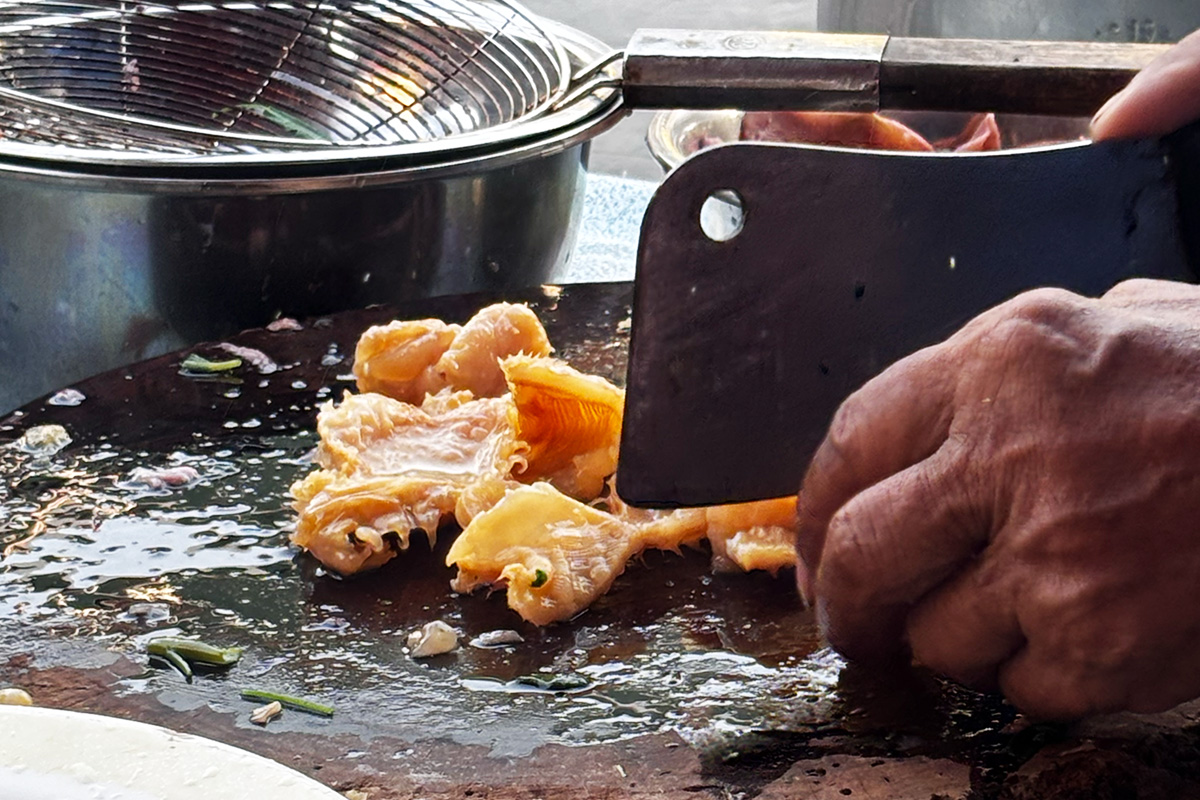
Photo credit: The Public Book
Today, both have grandchildren.
A few seats away, younger visitors approach the dish from an entirely different perspective. Curiosity often leads them there. How does jellyfish become rujak? What does juhi actually taste like?
The questions may differ, yet they lead to the same place.
Different generations arrive carrying different motivations. The recipe waiting for them remains unchanged.
The atmosphere surrounding the stall contributes just as much to its endurance.
Customers waiting for takeaway orders exchange recommendations with first-time visitors. Loyal regulars share stories with strangers seated beside them. Yono moves between preparing food and greeting customers, making sure nobody feels forgotten while waiting.
The result feels less like a transaction and more like an evening gathering that happens to revolve around food.
That sense of familiarity matters because food attract a first visit, though continuity depends on something broader. People return because a place becomes connected to memories, relationships, routines, and moments that extend beyond what is served on the plate.
Keeping that continuity alive presents its own challenges.
Yono admits there have been discussions about opening another location. Customers often travel considerable distances to reach the stall, making expansion seem like a logical next step.
Reality proves more complicated. His children already have careers of their own. Other family members are occupied with separate responsibilities. Operating another branch would require more hands than are currently available.
The future therefore rests on a question familiar to many family businesses. Who will continue it?
One customer offers an answer without hesitation. “You need to pass this recipe on to the younger generation,” they tell Yono.
Several surrounding tables immediately agree. The laughter that follows softens the moment, though the sentiment remains.
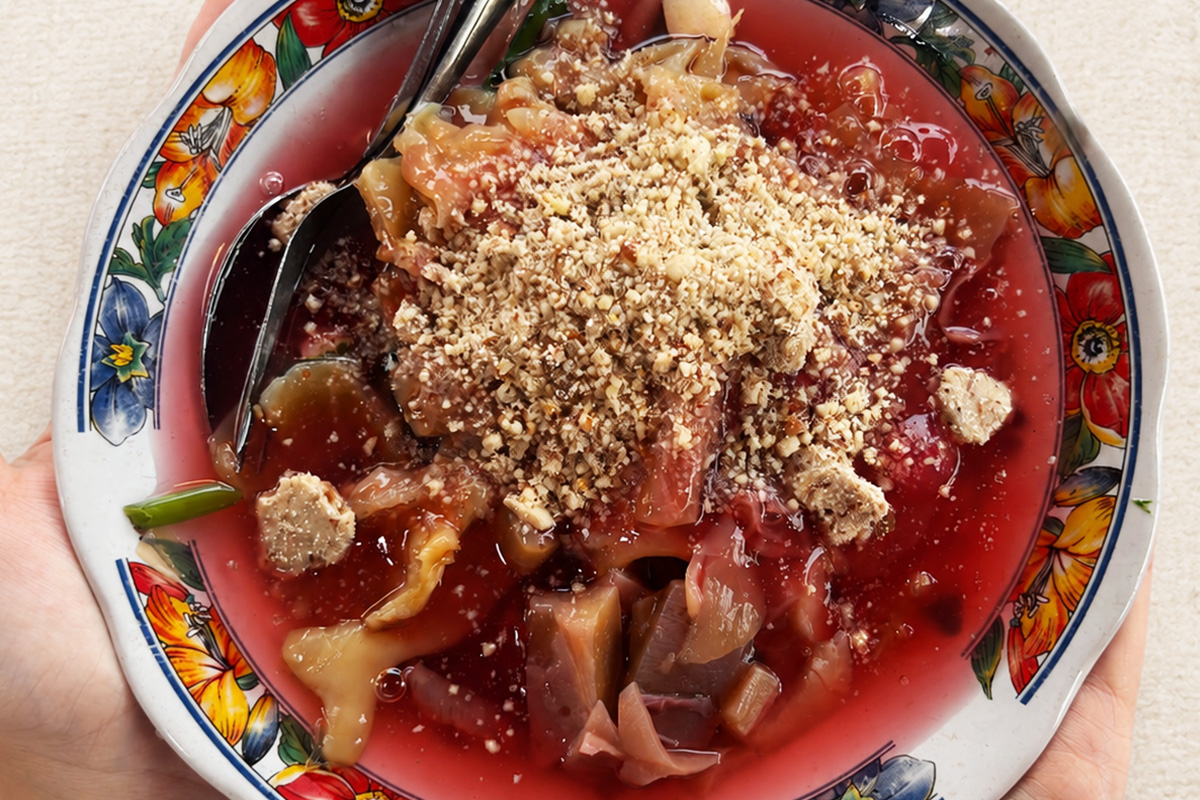
Photo credit: The Public Book
For a brief second, the conversation moves beyond food. It becomes a discussion about inheritance. About deciding which parts of a city deserve to travel into the future.
Yono’s hopes remain straightforward. He wants Rujak Shanghai to continue serving those who have returned for years, while welcoming newcomers discovering it for the first time. He hopes first-time visitors leave with enough curiosity to return again.
As evening settles over Glodok, traffic grows louder and the queue continues to form beneath the tent. One customer, after finishing a plate, turns to Yono with a simple request. “Make sure someone continues this.”
The surrounding tables immediately agree. For a moment, the conversation stops being about food.
It becomes about inheritance. About deciding which parts of a city deserve to travel into the future.
And somewhere between memory, curiosity, and another serving of Rujak Shanghai, the answer continues to take shape.