What does it mean to care for skin in a time when everything moves quickly?
Skincare today is everywhere. It fills shelves, screens, and daily conversations, often simplified into steps, trends, and visible results. Yet beneath this visibility sits something far quieter.
At its most essential, skincare is not built on transformation, but on maintenance. Skin, like any living system, requires balance. It needs to be kept clean without being stripped, and hydrated without being overwhelmed. These are not complex ideas, yet they are often lost within an industry that thrives on excess.
At its core, skincare functions as a form of everyday care. It exists in small, repeated actions that rarely announce themselves. Washing the face at the end of the day. Applying a layer of moisture before stepping out. Protecting the skin from sun exposure. None of these actions are extraordinary, yet together they form a rhythm.
Over time, that rhythm becomes something more than routine. Within this repetition, a different meaning begins to take shape. As shared by Bellinda Putri, co-founder of Hale, skincare often reflects something deeper than appearance.
“Control. Discipline. What we see on the surface is simply the outcome of consistency,” she explains.
What appears on the surface is rarely the starting point. Instead, it is the result of returning to the same act of care day after day, even when it feels unnecessary.
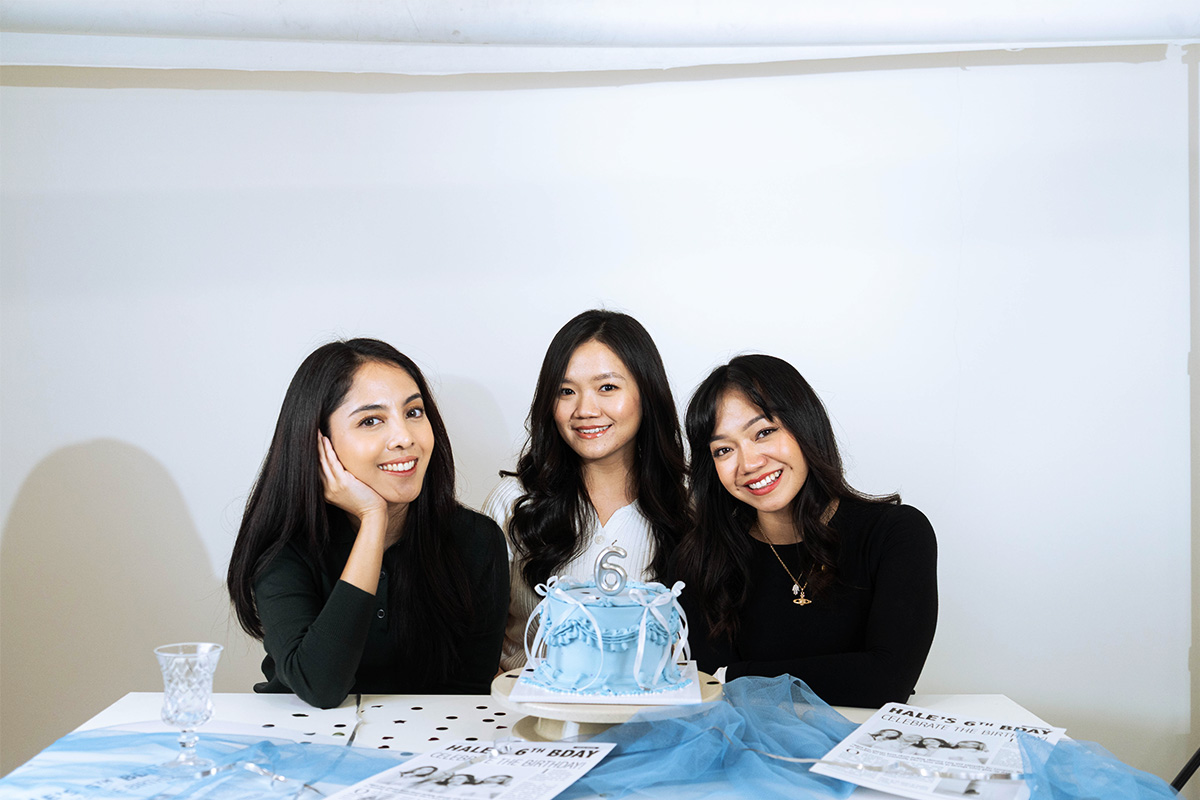
Photo credit: Hale
This sense of discipline carries a quieter psychological dimension. In moments where life feels uncertain or overwhelming, small acts of care can offer structure. Hale's team notes, “The act of self-care creates a sense of control.”
Skincare, in this context, becomes less about achieving ideal skin and more about maintaining steadiness. It is a reminder that some aspects of daily life remain within reach.
For many, these moments gradually shift from obligation into something more intentional. What begins as routine softens into ritual. “It becomes a moment of relaxation, a time to appreciate, to be mindful, and to take care of what is already there.” In this sense, skincare becomes a pause within the day, where attention is directed inward rather than outward.
Yet while the meaning of skincare deepens, the environment surrounding it continues to accelerate. The beauty industry moves quickly, shaped by trends, new ingredients, and shifting demands. Products are often introduced with urgency, encouraging constant change rather than consistency. Within this landscape, the fundamentals of care can become obscured, replaced by the pursuit of novelty.
It is within this tension that Hale was formed. Established in 2019, the brand emerged from a shared concern among its team regarding the condition of the local skincare landscape.
Many products at the time relied heavily on fragrance and essential oils, ingredients that, while appealing, could gradually compromise the skin barrier. For those with sensitive skin, options that were both safe and accessible remained limited.
The response was not to add complexity, but to return to fundamentals. Hale’s approach centres on what skin requires at its most basic level: to be cleansed gently and kept adequately hydrated. “At its core, all skin needs the same things, to be clean and to be moisturised,” the team explains.

Photo credit: Hale
From this foundation, variation exists only to accommodate different conditions, not to complicate the process itself.
This philosophy extends into formulation. Ingredients are selected based on clinical safety and effectiveness, while potential irritants such as fragrance are intentionally avoided. Balance becomes the guiding principle, particularly in maintaining the skin’s natural barrier. Even technical considerations, such as pH levels, are approached with care, ensuring that products work with the skin rather than against it.
Beyond formulation, Hale also challenges one of the most persistent assumptions within the industry that skincare belongs to a specific gender. In practice, the needs of skin remain largely consistent. “Skincare does not belong to a gender,” the brand believes.
Differences may exist in thickness or texture, yet the fundamentals of care remain universal. By positioning skincare as something unisex, Hale reframes it as a shared necessity rather than a segmented market.
This perspective reflects a broader influence shaped by women’s experiences. Sensitivity, attentiveness, and consideration form the basis of many decisions within the brand. Under the theme of Hers, these qualities become particularly relevant, not as limitations, but as strengths. Women’s perspectives contribute to a more careful and inclusive approach, where the impact of each product is considered beyond immediate results.
At the same time, Hale maintains a measured relationship with industry trends. Awareness is acknowledged as necessary, yet not all trends are adopted. New formulations are explored, tested, and often reconsidered if they do not offer meaningful improvement. The process is deliberate, allowing products to remain aligned with the brand’s original intention rather than external pressure.

Photo credit: Hale
Through this approach, skincare is returned to its simplest and most enduring form. It is no longer framed as a solution to be sought only in moments of concern, but as a steady presence within daily life. Hale positions itself not as a point of urgency, but as a point of reliability. A place to return to, particularly when the skin requires restoration.
This local brand holds the intention to become a place of comfort, a form of companionship. In this foundation, skincare extends beyond products. It becomes part of how individuals move through their day, supporting rather than interrupting.
Skincare, then, is not defined by transformation. It is defined by continuation. By the decision to care, repeatedly and quietly, without the need for immediate outcome.
In recognising this, the practice itself begins to shift. It is no longer about achieving a final state, but about sustaining balance over time. A form of care shaped not by urgency, but by presence.