Excitement for Banda Neira often begins long before the islands appear. Stories about the Spice Islands travel easily between travellers, carried through old writings, photographs, and quiet recommendations from those who once arrived and never fully forgot the experience. Yet reaching Banda requires patience. From Tulehu in Ambon, the fast boat crossing across the Banda Sea can take six to seven hours, long enough for anticipation to slowly settle into rhythm.
Some travellers drift into sleep while others remain outside letting sea wind and salt air accompany the journey. Conversations with guides move between stories of Banda’s past and the islands waiting somewhere beyond the horizon.
Small waves strike steadily against the boat while endless stretches of blue make time feel softer than usual. Somewhere in the middle of the crossing, the journey itself begins to feel inseparable from Banda.
Then, here it is, the islands emerge.
Gunung Api rises first against the horizon, followed by colourful waterfront houses and old colonial buildings standing quietly beside the harbour. Arrival in Banda Neira carries an unusual feeling, as though the islands exist slightly outside ordinary time.

Photo credit: Nejtrip
History here never feels confined to monuments or museums. It lingers naturally within streets, conversations, sea crossings, and the scent of nutmeg drifting through the air.
Centuries before boats began carrying visitors across these waters for diving and island hopping, Banda was already known far beyond the archipelago. For generations, the islands were the world’s only source of nutmeg and mace, spices once considered so valuable that European powers crossed oceans in pursuit of them.
During the sixteenth and seventeenth centuries, European powers crossed oceans in pursuit of spices so valuable they reshaped global trade itself. Portuguese and Dutch colonial forces eventually transformed Banda into the centre of violent monopoly control, leaving histories that continue to echo across the islands today.
Yet daily life in Banda never feels consumed by the past.
Warm nutmeg juice and nutmeg pancakes often greet travellers shortly after arrival, prepared by locals whose connection to pala remains woven into everyday life.
Around the harbour, children run through brightly coloured streets while neighbours sit outside exchanging stories beneath drying nutmeg hanging in front of their homes.
Boats move steadily across the water while motorbikes pass old colonial walls softened by age and tropical air. Nothing about Banda feels staged. Its beauty emerges through ordinary moments continuing naturally around centuries of history.
Walking deeper into Banda Neira gradually reveals another layer of the islands. Narrow roads lined with bougainvillea and sea-facing houses eventually lead toward the former exile residence of Sutan Sjahrir.
Sent to Banda by the Dutch colonial government in 1936 alongside Mohammad Hatta and Dr. Cipto Mangunkusumo, Sjahrir spent years on the islands reading, teaching local children, and developing political thought that would later shape Indonesia’s independence movement. Inside the house, shelves of books and quiet rooms still preserve traces of the intellectual life once unfolding there.
Nearby stands the former exile home of Mohammad Hatta, where Indonesia’s future vice president lived between 1936 and 1942. The atmosphere inside remains unexpectedly intimate. Windows overlook calm streets while personal belongings, photographs, and furniture quietly preserve fragments of a life shaped by exile rather than freedom.
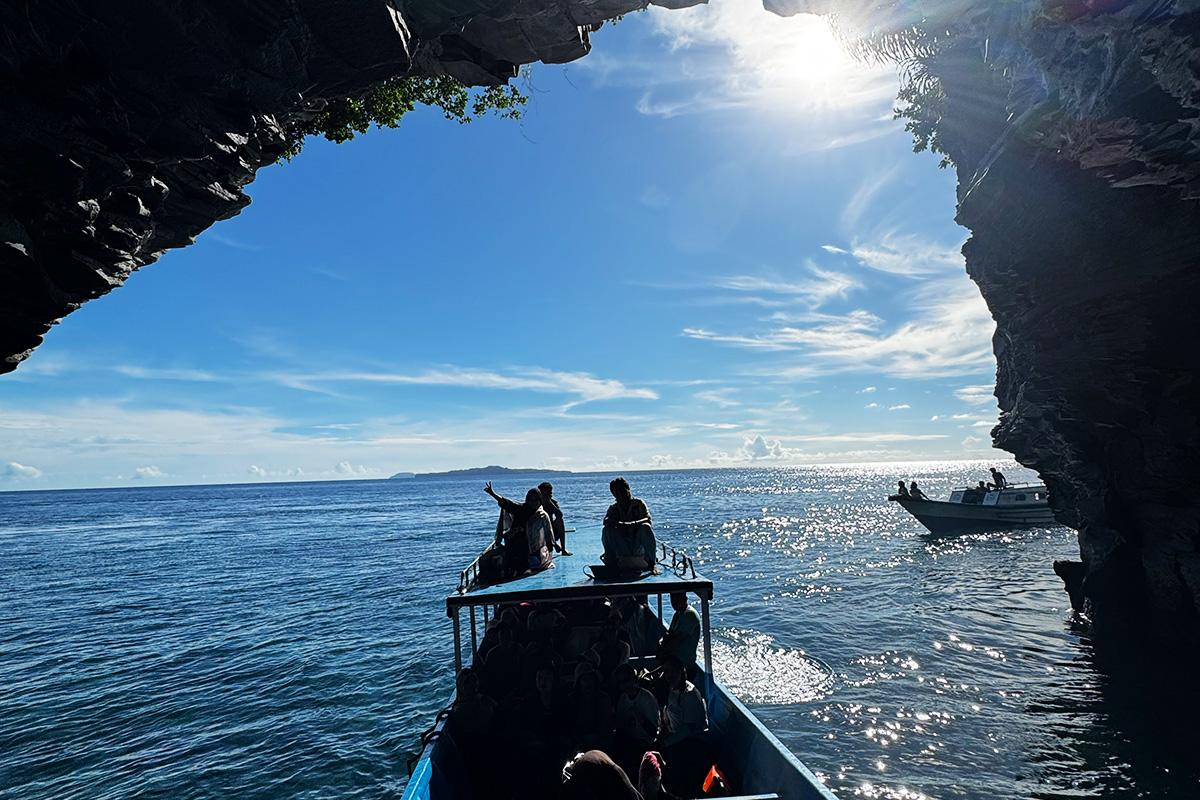
Photo credit: Nejtrip
Across from the complex, Istana Mini continues standing beneath the shade of old trees, adding another reminder that Banda’s story has always stretched far beyond spice alone.
The sunsets in Banda arrive slowly. Seafood fills long dinner tables while conversations drift easily between travellers, guides, and local residents. Surrounded by waters among the richest marine ecosystems in eastern Indonesia, Banda has long depended on the sea as both livelihood and identity.
Grilled tuna, squid, ikan kuah kuning, and freshly caught reef fish appear seasoned with flavours shaped by generations living between spice routes and fishing waters. Meals rarely feel rushed here. Stories continue long after plates are empty.
As night closes over Banda with clearer waves crashing against the shore and strong sea wind moving through the harbour, morning arrives beautifully. Boats begin crossing toward the surrounding islands while soft sunlight reveals the shifting blues of the Sea.
Along the route to Pulau Hatta, dolphins occasionally surface beside the boat before disappearing again beneath open water. Beneath the surface, coral reefs spread across volcanic formations shaped by eruptions from Gunung Api, whose lava flows transformed the seabed into ecosystems now filled with marine life.
Snorkelling through these waters feels less like entering a tourist destination and more like drifting through a living landscape shaped slowly by both nature and time.
Along Banda Besar, nutmeg plantations stretch beneath shaded trees where warm air carries the scent of spice through quiet pathways. Travellers passing through the plantations often encounter residents sorting nutmeg harvests or resting beneath the trees while sharing stories about island life.
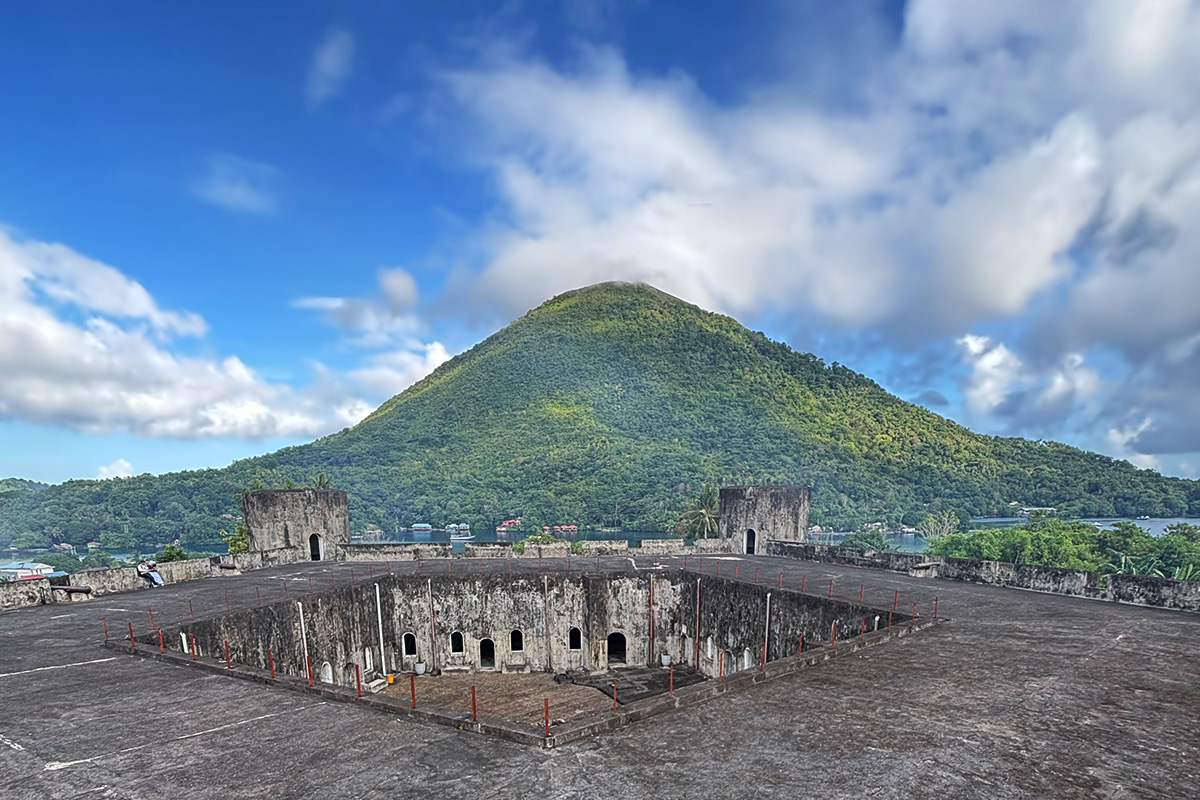
Photo credit: Nejtrip
The story of Banda rarely arrives through formal explanation. Instead, it appears naturally through routines repeated across generations.
Then comes Fort Belgica.
Standing above Banda Neira since its earliest Portuguese foundations in 1611 before later expansion by the Dutch East India Company, the fortress still overlooks the harbour with striking stillness. Thick stone walls frame views toward Gunung Api and the surrounding sea, creating a silence that feels heavier once travellers understand what unfolded here centuries ago.
Nearby sites connected to the Banda massacre of 1621 carry even deeper weight. Under Jan Pieterszoon Coen, Dutch colonial forces killed and displaced much of the Bandanese population after resistance to colonial monopoly control over nutmeg. Banda’s beauty never erases this violence. Instead, both remain inseparable from one another.
By late afternoon, movement across the islands slows naturally toward Lonthoir. Boats drift back toward shore while golden light settles across old docks and waterfront villages. Around Dermaga Lonthoir, conversations soften beneath skies turning amber against the Banda Sea.
It becomes easier to understand why Banda continues appearing within stories, travel writings, and reflections passed between generations of travellers. The islands carry a strange emotional permanence difficult to explain fully until experienced firsthand.
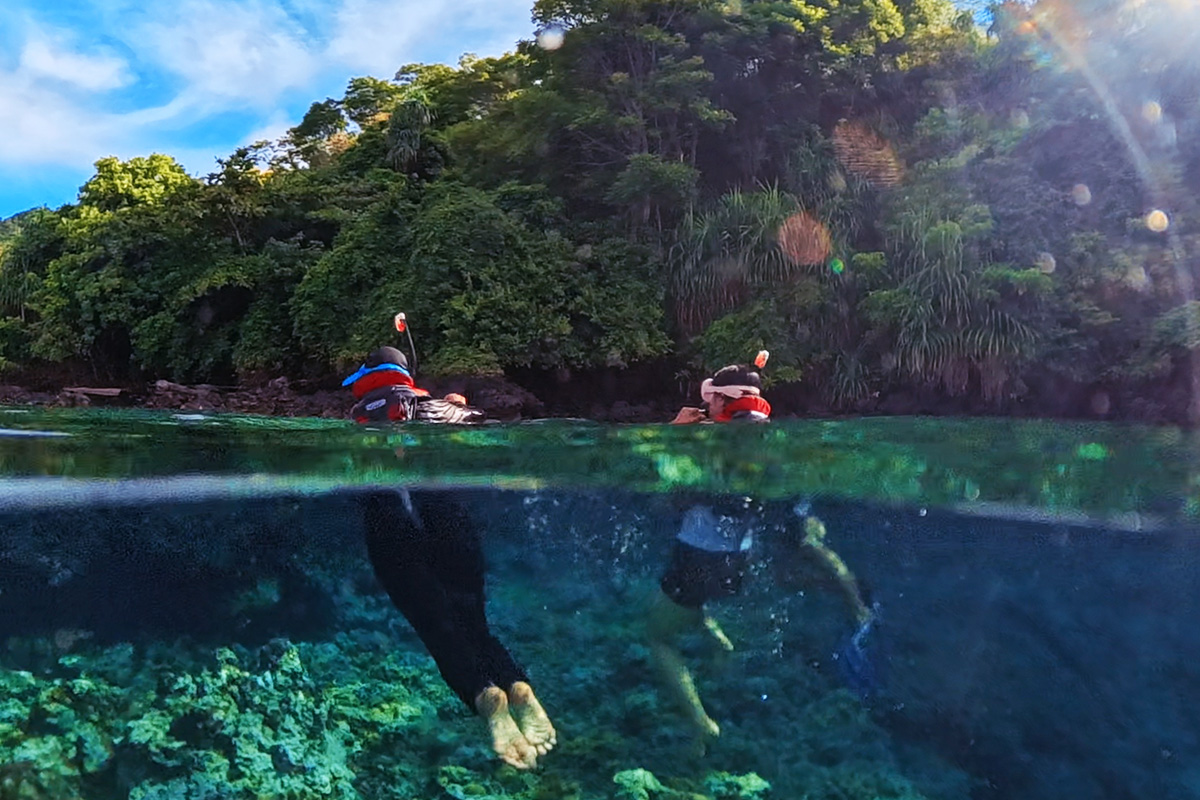
Photo credit: Nejtrip
What makes Banda Neira so iconic is not simply its history, nor its landscapes alone, but the way both continue existing side by side within everyday life. Colonial forts still overlook the harbour.
Nutmeg continues drying beneath the sun. Children play beside buildings older than the republic itself. Fishermen return home each evening while stories of exile, trade, resistance, and survival remain quietly embedded within the islands around them.
Travellers interested in experiencing Banda Neira beyond its landmarks can also explore the islands through @nejtrip, whose slower routes and local experiences offer a closer connection to both Banda’s history and the rhythms of life continuing across the archipelago today.
Perhaps that is what lingers most after leaving Banda Neira. Not only the scenery or the history, but the rare feeling of having walked through a place where the past never truly disappeared, only learned how to live gently beside the present.