Bitterness has a way of lingering. Not only on the tongue, but in memory, sharp, medicinal, and often misunderstood. For years, jamu has been defined by that single note, overshadowing everything else it carries within it. What remains, for many, is not the ritual itself, but the reluctance that follows.
Yet, jamu was never meant to be reduced to taste alone. Long before it became something to avoid, it existed as part of a larger rhythm: prepared with intention, consumed with quiet understanding. Across generations, it moved through households not as a daily gesture of care. Its roots trace back to the Javanese words Jampi and Usodo, a pairing that translates not simply into health, but into a prayer for it. Within that meaning lies a different way of seeing jamu, as something closer to devotion.
That distance between meaning and perception is where the shift begins. In today’s modern life, jamu is often positioned at the margins, associated with illness, age, and obligation. Its bitterness becomes its defining trait, its purpose reduced to function rather than experience. For younger generations especially, it is recognised, but rarely chosen. Something familiar, yet curiously removed from everyday preference.
This is not a disappearance, but a quiet dislocation. Traditions such as jamu do not vanish entirely because they recede, becoming symbolic rather than lived. In doing so, what is lost is not only the practice itself, but the understanding that once accompanied it. And yet, beneath that perception, the essence of jamu remains unchanged. Its compositions are grounded in balance, turmeric and tamarind in Kunyit Asam, long associated with digestion and vitality; Beras Kencur, with its warming qualities and restorative effects; Temulawak, often linked to immunity and internal health. These are not new discoveries, but inherited knowledge, carried forward through repetition and care.
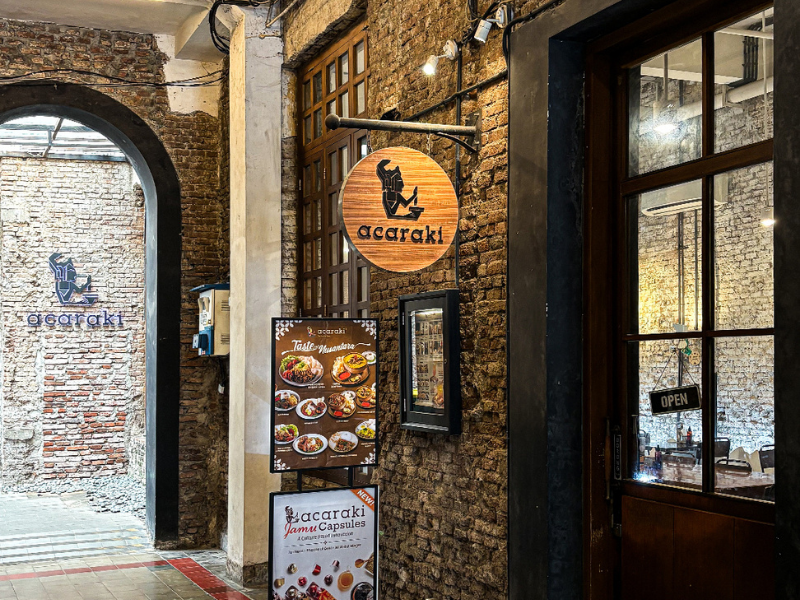
To encounter jamu today, then, is to return to something that has been partially forgotten. It is within this space of return that Acaraki Jamu positions itself not as a reinvention, but as a reintroduction, a revitalisation. Established in 2018 after years of development, Acaraki began with an observation: the distance between jamu and the people it once belonged to had less to do with its essence, and more to do with how it was understood.
“The stigma that jamu is a drink for when you are unwell, something bitter, something for older generations… that perception is still very strong, especially among the young,” Puji Sulistyowati their Marketing Manager notes. “That is what we have been trying to shift since the beginning.”
The name itself carries a deliberate weight. Derived from an inscription dating back to the Majapahit era, acaraki refers to the craft of preparing jamu, a role once held in high regard. “An Acaraki was not just someone who mixed ingredients,” they explain. “There was intention, even ritual. Sometimes meditation, fasting, preparing not just the body, but the mind before creating something meant to heal.” In adopting the name, the brand situates itself within that lineage, while acknowledging the responsibility that comes with it.
What follows is not preservation in its strictest sense, but translation. At Acaraki, jamu is approached through a contemporary lens, prepared using manual brewing techniques more commonly associated with coffee, presented within spaces that emphasise openness and interaction. Each store features an open bar, allowing the process itself to become part of the experience.
It is here that jamu begins to shift from something consumed passively, to something observed, even understood.
“From the beginning, we asked a simple question,” they recall. “Coffee is also bitter, yet it has become part of daily life. Why is jamu different, when it offers so much more?” The answer did not lie in altering its foundation, but in reframing its context. Years of research and experimentation followed, shaping a direction that would remain consistent: to bring jamu into a modern setting and more people without losing its essence.
That balance continues to define their practice. Ingredients are sourced with care, often through direct relationships with local farmers, alongside produce grown in their own garden in Cinagara, Bogor. “We want to grow together,” they note. “Not only as a brand, but with the farmers who understand these ingredients best.” Even as methods evolve, certain gestures remain: wooden spoons, careful preparation, an attention to process that echoes tradition rather than replaces it.
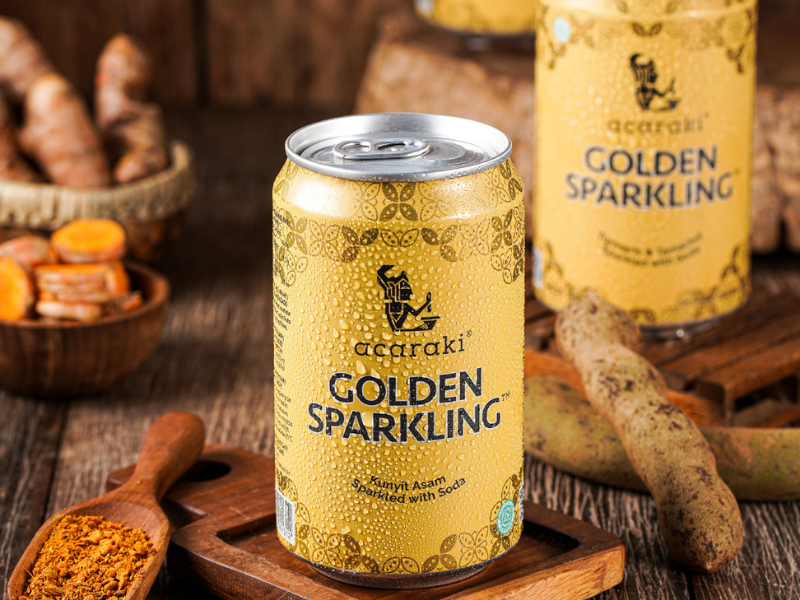
At the same time, adaptation becomes necessary. Menu development, presentation, and accessibility are shaped with a broader audience in mind. Drinks such as Golden Sparkling, combining turmeric and tamarind with a light effervescence, or Moringacha Latte, which draws from the familiarity of matcha while using moringa leaves, reflect this approach. They do not depart from jamu’s foundation, but extend its language.
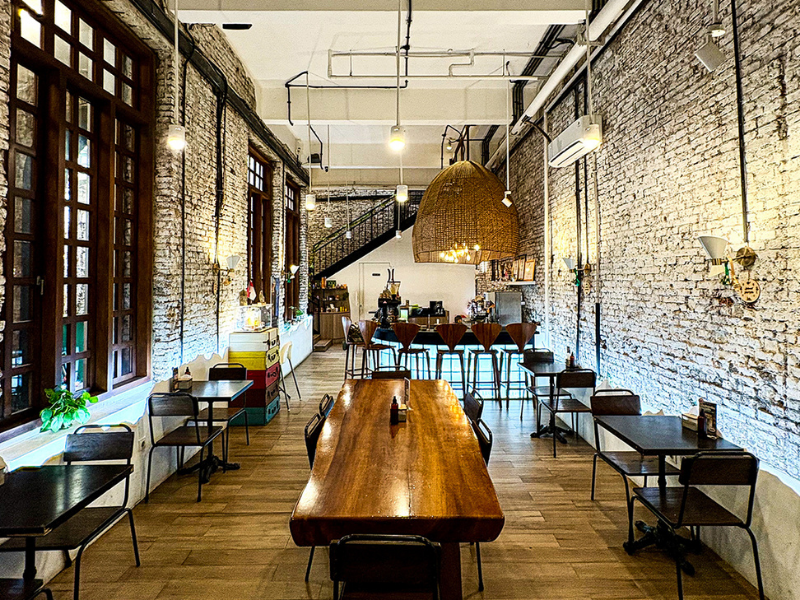
More than the drinks themselves, it is the surrounding experience that reframes perception. Workshops, collaborations, and cultural activations form an integral part of Acaraki’s approach, positioning jamu within a wider context of Indonesian heritage. “We are not only serving jamu,” they explain. “We are hosting people, menjamu, to understand, to experience, to connect with the culture behind it.”
In this sense, Acaraki moves beyond being a place of consumption. It becomes a space of creative learning where tradition is presented as something that can be engaged with, questioned, and gradually reabsorbed into daily life. The aim is not to convince, but to invite.
There is, perhaps, a quiet urgency within this effort. As cultural practices become increasingly aestheticised, the risk lies in their detachment from lived experience. Jamu, with its layered history and function, resists that simplification but only if it continues to be practised, not merely referenced.
“We believe that if more people come to know jamu, then its meaning will be easier to understand,” they reflect. “And if it is understood, it will continue.”
What Acaraki offers is not a replacement for tradition, but a way back into it. A shift in perspective, rather than a change in substance. In a landscape shaped by convenience, such spaces become less of an option, and more of a necessary bridge to connect what has been carried forward with what is still to be lived.
To return to jamu is, in many ways, to reconsider what has long been familiar. As a possibility, and perhaps, within that first sip no longer defined by bitterness alone, there is something quieter waiting to be recognised. Take the curious mind, have a way, and enjoy the glass of jamu today.