Jewellery is often spoken about in light terms. An accessory, a finishing touch, something that completes a look. In many conversations, especially within contemporary urban culture, it sits quietly alongside fashion, polished, decorative, and often interchangeable. Yet behind its scale lies a far more layered reality.
Across local design scenes, jewellery continues to grow as an expressive medium. New brands emerge with distinct aesthetics, materials, and narratives. Still, it is not uncommon to encounter visual languages that echo beyond borders, forms that feel familiar, silhouettes that recall global references, or details that seem shaped by what is already circulating widely. It reflects the speed of today’s design landscape, where inspiration travels quickly, sometimes faster than reflection itself.
In that environment, originality becomes both an ambition and a quiet resistance. Because jewellery, despite its size, demands a kind of discipline that few other design objects require. It is not simply seen. It is worn. It rests against the skin, follows the movement of the body, and exists in close, almost intimate proximity to the person who carries it. A piece may appear visually striking, but if it does not sit comfortably, if its weight feels unfamiliar, or if its form does not respond naturally to the body, it loses its purpose.
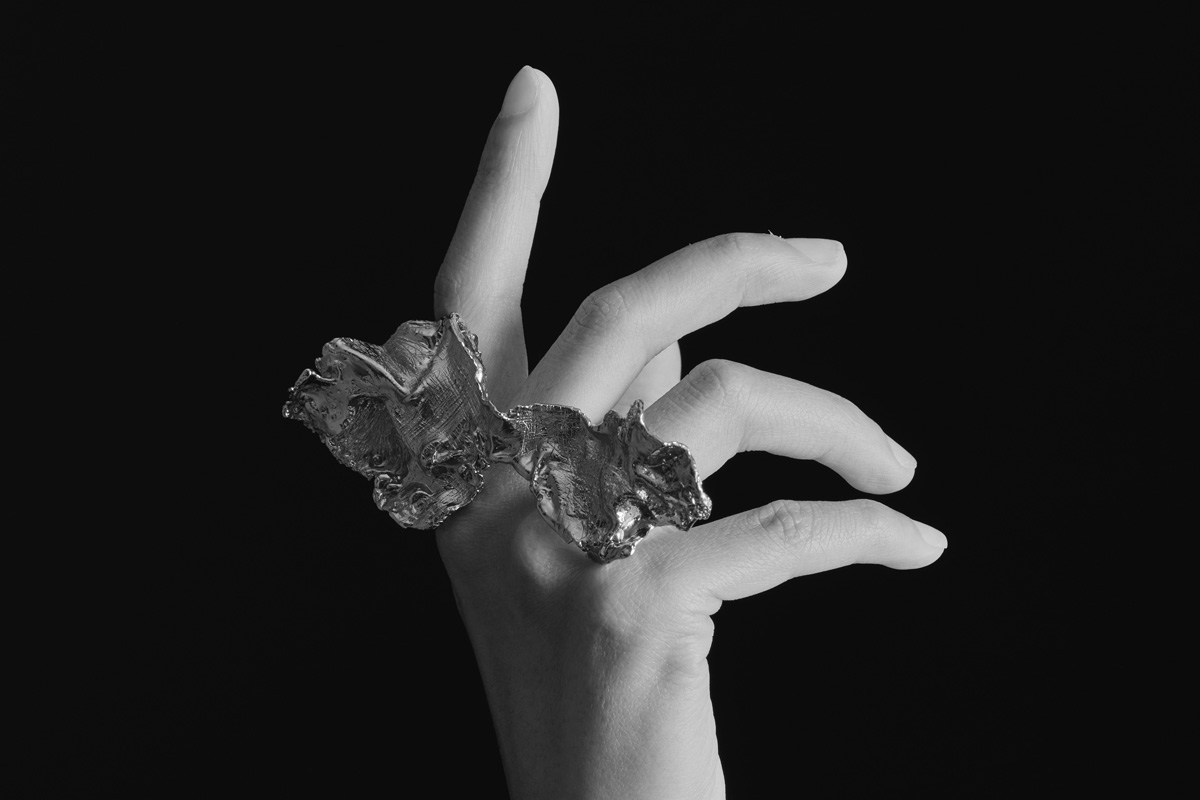
Photo credit: Gelap Ruang Jiwa
This is where the complexity begins, because designing jewellery is not only about shaping an idea into form. It requires a careful negotiation between aesthetics and function, between artistic intention and physical experience. Every curve, texture, and proportion must be considered visually and sensorially. Materials must be chosen with intention. Surfaces must be refined through repeated trials. Even the smallest adjustment can alter how a piece feels when worn.
More than that, jewellery holds a unique position within art and design. Unlike objects that are simply observed, it must be experienced through touch. It lives on the body. It moves with it. It becomes part of someone’s daily rhythm. This proximity demands an additional layer of care, one that goes beyond visual appeal into something more intimate.
And yet, within an industry shaped by rapid trends and constant production cycles, that level of care is often challenged by the need to move quickly. To create something original within this context requires more than technical skill. It demands a clear point of view, one that is not easily swayed by what is popular, but instead rooted in something more personal.
This is where Gelap Ruang Jiwa quietly positions itself. Rather than beginning with a product, the brand begins with a feeling.
The origins of Gelap Ruang Jiwa trace back not to a design brief or market opportunity, but to a moment of emotional intensity. Its founder, Runa Pratomo, the creative behind the brand shares a period marked by uncertainty, vulnerability, and what she once understood as a “dark space” within herself. From that moment came an attempt to process, first through writing, and then through making.
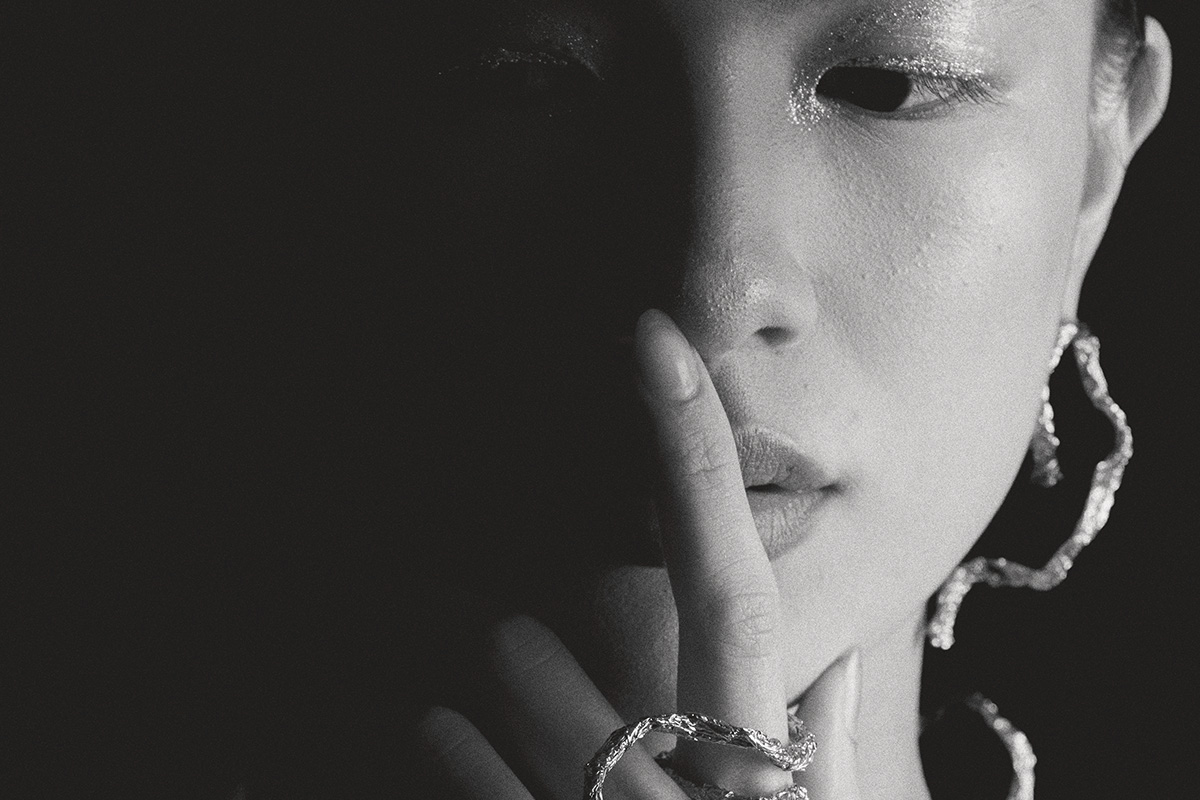
Photo credit: Gelap Ruang Jiwa
Forms began to emerge through experimentation. Materials were not chosen for their perfection, but for their availability and responsiveness. Objects found in everyday life: discarded plastics, unexpected textures, became starting points. The process was intuitive, unstructured, and deeply personal. It was not about arriving at a final form, but about releasing something that needed to be expressed.
From these explorations came what the brand now recognises as its identity: abstract, textured, and often irregular forms that resist predictability. Only afterwards did jewellery enter the process. This is where Gelap Ruang Jiwa begins to differ from many conventional jewellery practices. Rather than starting from sketching and predefined concepts, the process begins from emotion, translated into physical exploration.
These early forms created through what the brand calls experimental and exploratory techniques, are then developed into what they refer to as “modules” and these modules become the foundation. From there, the process shifts into a more technical phase. Each module undergoes research and development to determine whether it can be translated into metal. The transition is not always immediate, or even possible. Forms must be tested, adjusted, and sometimes reworked entirely to ensure they can exist structurally.
Once successful, these forms are then reinterpreted: sketched, composed, and assembled into wearable pieces. The final stage is equally meticulous because each jewellery piece is produced one by one, by hand, ensuring that the original character of the form is preserved throughout the process.
Their material most commonly used is bronze, though variations in silver and gold are also explored. What remains consistent, however, is the attention given to each stage. From raw exploration to finished object, the process is layered, time-intensive, and deeply intentional. This is where the idea of complexity expands because it is the transformation of material, the precision of crafting, but also emotional complexity.
Each piece carries traces of its origin, a feeling, a moment, a release. What appears as abstraction on the surface is, in reality, a record of something lived. And within that, imperfection becomes deliberate.
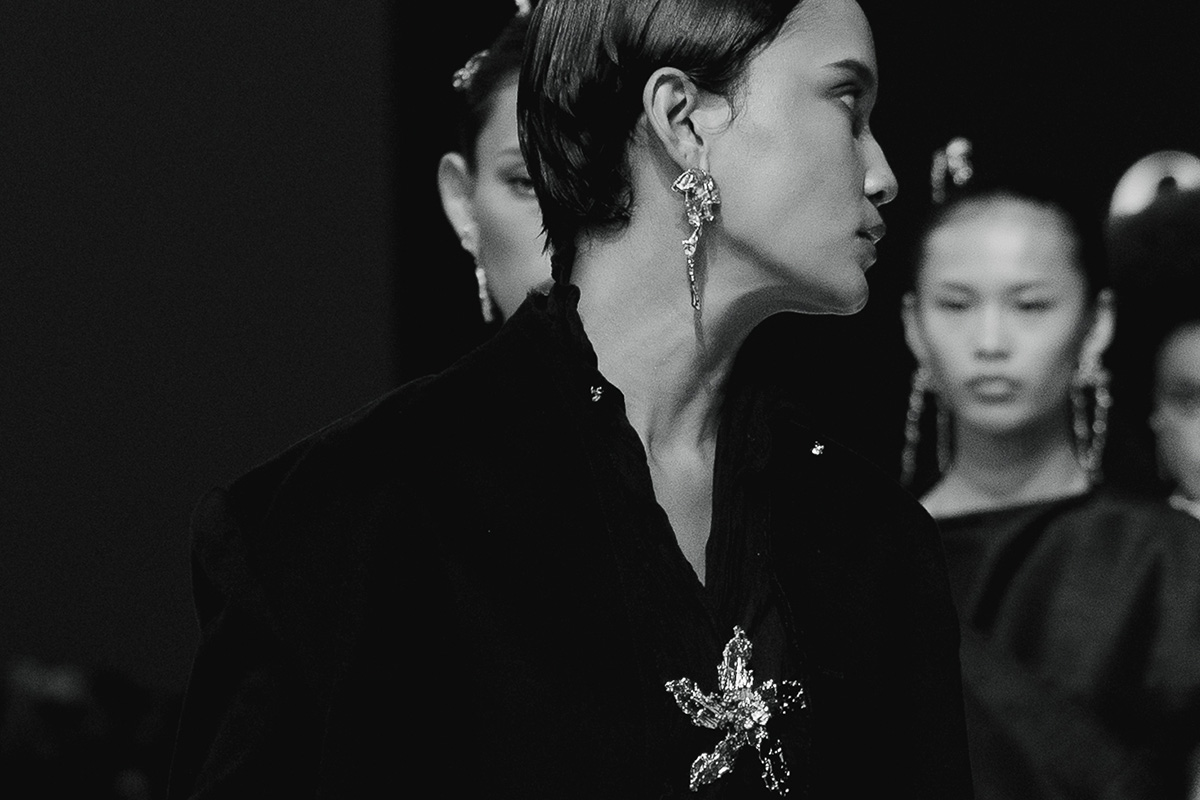
Photo credit: Gelap Ruang Jiwa
Rather than refining forms into polished uniformity, Gelap Ruang Jiwa chooses to preserve irregularity. Textures remain visible. Edges are allowed to feel organic. Surfaces are not simplified for ease, but retained for meaning. The result is jewellery that resists expectation, pieces that feel closer to something human than something manufactured.
This perspective is inseparable from its position as a women-led brand.
“What I am most grateful for as a woman is sensitivity. It becomes my first and most essential foundation in creating. The values I am able to capture, the emotions I am able to feel through that sensitivity, are what I express through my work.”
This sensitivity shapes the process to the message behind each piece. Within the abstract and often imperfect forms lies an intention to redefine how beauty is perceived. Jewelry as something flawless, symmetrical, as something that can exist within irregularity, within texture, within the unexpected.
Runa shares, “We want people to see that beauty can exist within imperfection. When someone wears our pieces, we hope they can feel themselves again, to feel valuable, feel confident, and most importantly to feel alive.”
Then jewelry, in this context becomes more than adornment. It becomes a point of connection between body and object, between experience and expression. Yet sustaining this approach within a commercial landscape presents its own challenges.
In its early stages, Gelap Ruang Jiwa faced uncertainty. Its name, its forms, and its identity did not immediately align with prevailing expectations. The market, often shaped by familiarity and clarity, required time to understand something that deliberately resisted both.
Consistency became essential. Over time, recognition grew. But with it came a new set of questions. How does a brand remain true to its identity while continuing to grow? How does it respond to trends without being defined by them?
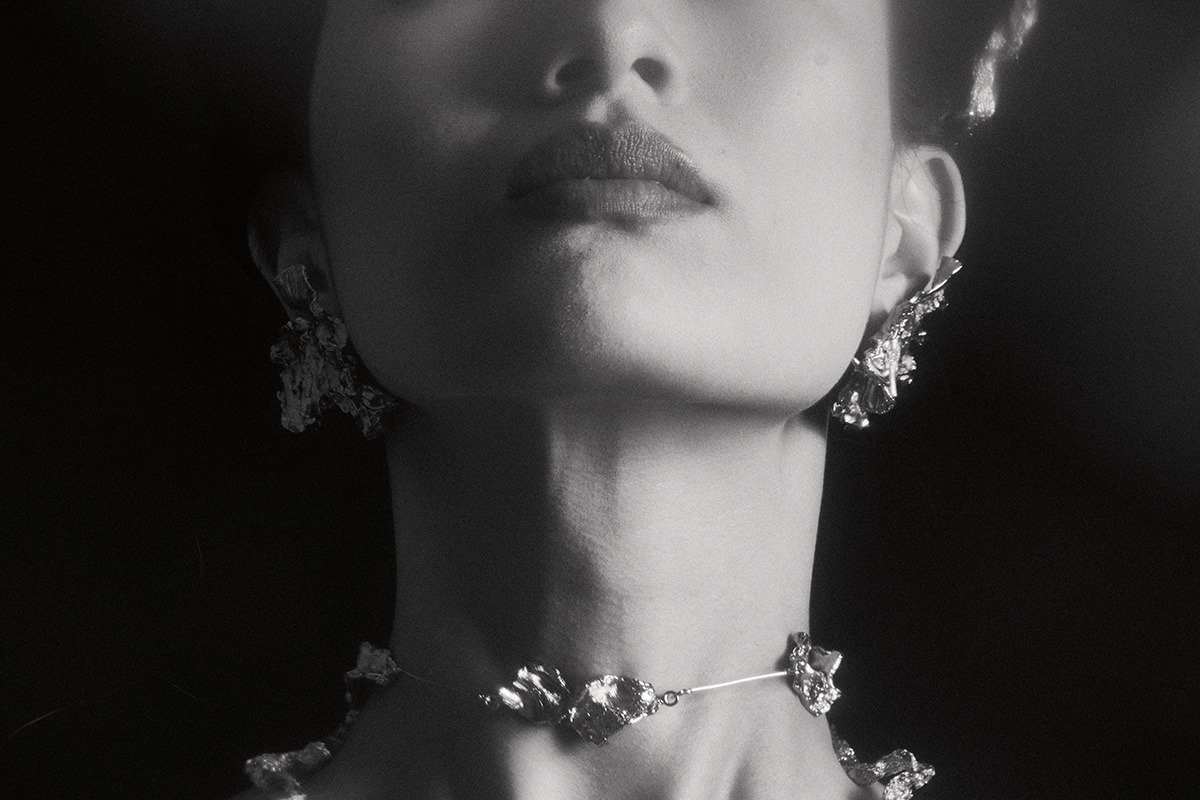
Photo credit: Gelap Ruang Jiwa
For Gelap Ruang Jiwa, the answer lies in balance. Trends are acknowledged, but not followed blindly. External inputs, market demand, customer feedback, and shifting aesthetics are considered, but always placed after the initial impulse. The starting point remains unchanged: emotion, story, and the need to express.
What follows is a process of careful understanding. Which elements can be adapted without losing essence? Which directions align naturally with the brand’s identity? It is not about compromise, but about alignment. This understanding in many ways becomes part of the creative process itself. Because the complexity of jewellery does not end at its making. It extends into how it exists within the world, how it is received, worn, and understood.
As Gelap Ruang Jiwa continues to evolve, its approach remains grounded in one belief: that growth does not need to be rushed to be meaningful.
In an industry that often equates speed with success, choosing to move slowly becomes a statement in itself. Because jewellery, at its most honest, is never simply about appearance. It is about what it carries. And in forms that resist perfection, forms shaped by feeling, refined through care, and worn with intention, there exists something more enduring: a quiet sense of connection, one that allows its wearer to feel, to return, and perhaps, to come alive again.